Your Snow Contractor Didn’t Show Up: What to Do Next
A snow-removal contractor who does not show up after a storm can leave you with more than an inconvenient driveway. You may need to get to work, get children out of the house, make the property accessible, or deal with snow and ice before conditions deteriorate.
If your contractor has not arrived, do not spend hours waiting without a plan. Start by checking the agreement, document the condition of the property, contact the contractor in writing, and arrange replacement service if you cannot safely wait.
Here is a practical way to handle the situation.
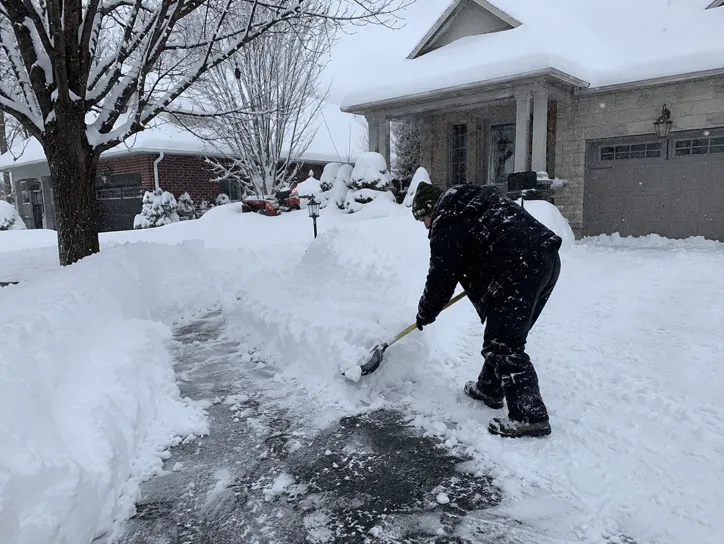
1. Check your snow-removal contract first
Before assuming the contractor has breached the agreement, check what the contract actually promises.
Look for:
- The service trigger, such as a specific snowfall depth
- The expected response time
- Whether service occurs after every storm or only above a certain accumulation
- Whether the agreement covers plowing, shovelling, salting, or all three
- Whether sidewalks, steps, entrances, or walkways are included
- Whether the contractor has the right to delay service during severe weather
- How missed service or complaints must be reported
- Cancellation and refund terms
- Any limits on the contractor’s liability
This matters because a contractor may have promised service within a particular period rather than immediately after snowfall ends.
If the contract is unclear, preserve a copy of it before discussing the dispute further.
2. Photograph the property before anything changes
Take clear photographs or video of:
- The driveway
- Walkways
- Steps
- Entrances
- Parking areas
- Snow depth, where relevant
- Any areas the contractor was specifically hired to clear
- The time and date, if your device records them
If you eventually need to explain why you hired another contractor, this documentation can help establish the condition of the property and when you contacted the original contractor.
Photos do not, by themselves, establish who is legally responsible for a loss. Their value is that they preserve evidence of what the property looked like at the time.
3. Contact the contractor in writing
Call if necessary, but also send a text or email.
Keep the message factual. State:
- The property has not been serviced.
- When service was expected under the contract.
- That you are requesting an update.
- When you need a response.
- That you may arrange alternative service if the contractor cannot attend.
For example:
The property has not yet been cleared following today’s snowfall. Our agreement calls for service after this level of accumulation. Please confirm whether you will be attending and, if so, the expected arrival time. If you cannot provide service within a reasonable timeframe, please let me know so I can make other arrangements.
Avoid making accusations in the first message. Your objective is to create a clear record and find out whether the contractor is actually coming.
4. If you cannot wait, arrange replacement service
There is no universal rule that says you must wait indefinitely for a contractor who is late.
If the property needs to be cleared and the original contractor cannot give you a reasonable service time, you can consider contacting another provider.
Before hiring someone, ask:
- When can you actually arrive?
- What areas will you clear?
- Does the price include the walkway and steps?
- Is salting or ice control included?
- Where will the snow be placed?
- Are there additional charges for heavy accumulation?
- Will you provide a receipt?
- Are you licensed to operate a snow plow in Ottawa, if a snow plow is being used?
Keep the receipt and payment record from the replacement contractor.
Do not assume that the original contractor automatically owes you the replacement cost. Whether you can recover that expense depends on the contract and the circumstances.
5. If you hire a replacement contractor in Ottawa, check the licence
Ottawa requires businesses that plow or remove snow from private property with a snow plow to hold a snow plow contractor licence, subject to specific exemptions. The City’s current licensing requirements include proof of insurance, and the current minimum motor-vehicle liability coverage for applicable licensed snow plow vehicles is $2 million.
The City also requires licensed snow plow contractors to display identifying information on their vehicles and comply with rules governing where snow can be deposited.
The City advises consumers to ask contractors for proof of licensing. If you are unsure whether a contractor is licensed, you can verify licensing through the City of Ottawa.
This is particularly important when you are hiring someone quickly after a storm. A low price is not useful if the person cannot provide the service you actually need.
6. Where can the replacement crew put the snow?
Do not assume that snow can simply be pushed into the street, onto a sidewalk, or onto someone else’s property.
Ottawa prohibits snow plow contractors from dumping or depositing snow in unauthorized locations. The City also states that private operators cannot use municipal snow disposal facilities for snow collected from private property.
Before work starts, tell the contractor where snow can safely and legally be placed on your property.
If there is no suitable space, ask whether the contractor provides snow hauling or another removal option.
7. Know what you are actually paying for
“Snow removal” can mean different things.
A contractor may provide:
- Driveway plowing
- Snow blowing
- Shovelling
- Walkway clearing
- Step clearing
- Entrance clearing
- Ice control
- Snow hauling
These are not necessarily included in the same service.
For example, a contractor may plow a driveway but not shovel the front steps. Another may clear the entire property but charge separately for salt or additional visits.
Get the scope in writing.
8. The windrow at the end of the driveway is different
After the City clears a road, municipal equipment can leave a pile of snow across the end of a driveway. Ottawa calls this a snow windrow.
The City states that property owners are responsible for removing the windrow left at the end of their driveway after municipal plowing.
That does not necessarily mean your private snow contractor is responsible for removing it.
Check your contract. If windrow removal is included, it should be clear from the service terms.
If it is not included, ask the contractor before assuming it is part of the regular driveway-plowing service.
9. Snow clearing and ice control are different
Clearing snow does not necessarily eliminate slippery conditions.
After snow is removed, a property can still have:
- Packed snow
- Ice
- Frozen meltwater
- Refrozen surfaces
- Slippery transitions at entrances
- Ice around steps or walkways
Ask specifically whether the contractor provides de-icing or salting.
If you are responsible for the property, inspect walking surfaces after the snow has been cleared rather than assuming the job is complete simply because the pavement is visible.
10. What if someone slips and gets hurt?
This is where the situation becomes more serious.
Ontario’s Occupiers’ Liability Act generally requires an occupier to take reasonable care to keep people entering the premises reasonably safe in the circumstances. The Act also contains specific provisions dealing with independent contractors.
The fact that you hired a snow contractor does not automatically answer the question of who would be responsible after an injury. Responsibility can depend on the facts, the contract, what work was actually performed, and the conduct of the parties.
If someone is injured:
- Get appropriate medical attention.
- Photograph the area.
- Record the date and time.
- Preserve relevant video footage.
- Keep communications with the contractor.
- Keep the snow-removal contract.
- Keep invoices and receipts.
- Avoid deleting or altering relevant records.
- Obtain legal advice if there is a significant injury or potential claim.
Ontario has a 60-day notice rule for certain snow and ice injury claims
Section 6.1 of Ontario’s Occupiers’ Liability Act provides that, subject to exceptions, written notice of a claim for personal injury caused by snow or ice must be given within 60 days of the injury to an occupier or an independent snow or ice removal contractor employed by the occupier. The legislation also provides exceptions, including circumstances involving death or where a judge finds a reasonable excuse for the late or insufficient notice and no prejudice to the defendant.
This is a legal requirement, not simply a recommendation. If an injury has occurred, do not rely on a general internet article to determine what you need to do. Speak with a lawyer promptly.
11. What if the original contractor refuses to pay for replacement service?
Start with the contract.
Determine:
- What service was promised?
- Was the service trigger reached?
- Was the contractor given reasonable notice?
- Did the contractor have a contractual excuse for delaying service?
- Did you give the contractor an opportunity to perform?
- Why was replacement service necessary?
- What did the replacement service cost?
Keep copies of both contractors’ invoices and all communications.
If the amount is significant, or the contractor disputes responsibility, consider getting legal advice before escalating the dispute.
Do not assume that a missed service automatically creates a right to reimbursement. The answer depends on the agreement and the facts.
12. Fix the problem before the next storm
A missed visit is also an opportunity to identify weaknesses in your snow-removal agreement.
Before the next storm, make sure the contract answers these questions:
When does service begin?
For example:
- After a specified snowfall accumulation
- After snowfall ends
- During the storm
- By a particular time
What areas are included?
Specify:
- Driveway
- Walkway
- Front steps
- Side entrance
- Parking area
- Path to the garage
- Other access routes
Is ice control included?
If salt, sand, or another de-icing treatment is included, specify when it will be applied and whether there is an additional charge.
What happens during extreme storms?
The agreement should explain whether unusually heavy snowfall, road closures, equipment failures, or other circumstances can affect response times.
What happens if the contractor misses the service?
This is particularly important.
The contract should explain how missed service is handled, including any notice requirements, credits, cancellation rights, or other remedies.
Who removes the windrow?
Do not leave this ambiguous.
Where does the snow go?
Specify acceptable areas on the property and any additional cost for hauling snow away.
13. A simple decision process when your contractor is late
If you are standing at the window wondering what to do, use this sequence:
Step 1: Check the contract.
Has the contractor actually missed the agreed service window?
Step 2: Document the property.
Take photographs and record the time.
Step 3: Contact the contractor.
Ask for a specific arrival time rather than a vague promise to “come soon.”
Step 4: Decide how long you can reasonably wait.
Consider weather conditions, access needs, safety, and whether anyone needs to use the property.
Step 5: If necessary, arrange replacement service.
Confirm the scope and price before work begins.
Step 6: Save everything.
Keep the original contract, messages, photographs, receipts, and payment records.
Step 7: Address the contract afterward.
If the contractor repeatedly misses service, decide whether the agreement needs to be changed or terminated according to its terms.
Frequently Asked Questions
How long should I wait for my snow contractor?
There is no single waiting period that applies to every contract. Start with the service window in your agreement. If the contractor has missed that window, contact them and request a specific arrival time.
Can I hire another company if my regular contractor does not show up?
You may decide to arrange replacement service if you cannot reasonably wait, but whether the original contractor is responsible for the additional cost depends on the contract and circumstances.
Should I cancel my contract immediately?
Not necessarily. First determine what the contract says about missed service, notice, cancellation, and refunds. If the problem is recurring, consider getting legal advice before terminating a contract where the financial consequences are significant.
Is my snow contractor required to be licensed in Ottawa?
A business that operates a snow plow to clear or remove snow from private property generally requires an Ottawa snow plow contractor licence, subject to the City’s stated exemptions.
Does hiring a snow contractor remove my responsibility for the property?
Not automatically. Ontario’s Occupiers’ Liability Act contains rules concerning occupiers and independent contractors, and the circumstances of each case matter.
Who is responsible for the snow windrow?
Ottawa states that property owners are responsible for the windrow left at the end of a driveway by municipal plows. Whether your private contractor has agreed to remove it is a separate contractual question.
What should I do if someone slips and is injured?
Make sure they receive appropriate medical attention, preserve evidence, and document the condition of the property. Because Ontario has specific rules concerning snow and ice injury claims, including a 60-day written-notice provision in certain circumstances, obtain legal advice promptly after a significant injury.
The Bottom Line
When a snow contractor does not show up, the priority is not proving who is at fault. It is protecting the property, keeping people safe, and preserving your options.
Check the contract. Document the condition of the property. Contact the contractor in writing. If you cannot reasonably wait, arrange appropriate replacement service and keep the receipt.
For future contracts, be specific about response times, the areas to be cleared, ice control, windrows, snow placement, and what happens when service is missed.
A clear contract and good documentation will usually make a snow-removal dispute much easier to understand than a long chain of angry calls after the storm.