Snow Hauling in Ottawa: When to Remove Commercial Snow Piles
Ottawa winters create a problem that becomes more difficult with every major snowfall: eventually, there may be nowhere left to put the snow.
For a commercial property, snow piles can consume parking spaces, narrow drive lanes, reduce visibility, interfere with deliveries, and make access around the building more difficult. Once the available storage areas are full, simply pushing the snow to another part of the property may not solve the problem.
The decision is usually straightforward:
Can the snow stay where it is? Can it be relocated safely? Or does it need to leave the property?
Understanding that distinction can help property managers avoid unnecessary hauling while making sure there is enough space for the next storm.
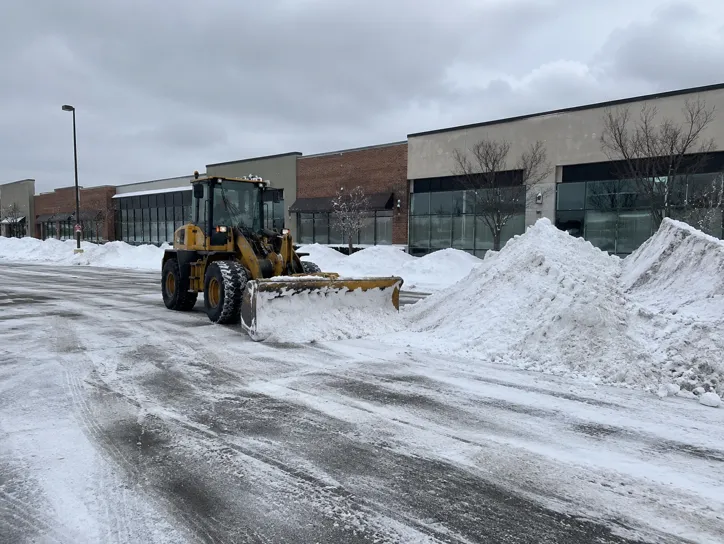
When does a commercial property need snow hauling?
Snow hauling becomes a practical option when a property no longer has enough suitable space to store additional snow.
Some common signs include:
- Snow piles are occupying parking spaces that need to remain available.
- Drive lanes are becoming narrower.
- Snowbanks are reducing visibility at entrances or intersections.
- Loading areas are becoming difficult to use.
- Pedestrian routes or building entrances are being affected.
- Snow is being pushed into areas that will interfere with future parking or operations.
- Accessible parking spaces are at risk of being blocked.
- The property is approaching the point where the next significant snowfall will exceed its available storage capacity.
This does not mean every large snow pile needs to be hauled away.
If the property has a suitable storage area, keeping the snow on-site can be simpler and less expensive. Ottawa’s consumer guidance also advises that snow should generally be stored on the client’s property where possible.
The issue is what happens when that storage capacity is exhausted.
Snow relocation vs. snow hauling
These are two different services.
Snow relocation
Snow relocation means moving snow from one part of the property to another.
For example, a loader might move snow away from parking spaces and place it along a designated area at the edge of the lot.
If the property has sufficient space, this can extend its snow-storage capacity without requiring trucks.
Snow hauling
Snow hauling means loading snow into trucks and transporting it away from the property.
This becomes relevant when there is no practical storage area remaining or when keeping the snow on-site would interfere with parking, access, visibility, drainage, or other property operations.
The distinction is important because hauling adds another layer of logistics. The snow must be loaded, transported, unloaded at an appropriate location, and the truck must return before another load can be moved.
If there is room to relocate the snow safely, hauling may not be necessary.
If relocation only moves the pile from one problem area to another, hauling may be the better solution.
Why snow hauling is a logistics problem
Removing a large snow pile is not simply a matter of sending a truck to the property.
A typical hauling operation may involve:
- A loader or similar machine preparing and loading the snow.
- A truck positioning itself beside the loading equipment.
- Snow being loaded into the truck.
- The truck travelling to the disposal location.
- The truck unloading.
- The truck returning to the property.
- The process repeating until the required amount of snow has been removed.
The time required for each truck cycle matters.
A truck that spends a short amount of time travelling and unloading can return for another load quickly. A longer disposal trip means each truck completes fewer loads during the same period.
That is why a contractor’s plan should account for more than the size of the snow pile. Equipment, loading access, truck availability, travel distance, disposal arrangements, and site conditions can all affect the duration of the job.
Where can commercial snow be disposed of in Ottawa?
This is one of the most important questions to ask before approving a hauling job.
Ottawa’s current snow-plow contractor rules prohibit licensed contractors from depositing snow or ice on City property, on private property other than their client’s property or an authorized snow disposal site, and on accessible parking spaces.
That means a contractor should have a clear plan for where privately removed snow will go.
Property managers should ask:
- Where will the snow be taken?
- Is the destination authorized for this type of disposal?
- Is disposal included in the quoted price?
- Is transportation included?
- Is the quote based on an estimated volume or a specific number of loads?
- Could additional disposal or transportation costs apply?
Do not assume that a municipal snow facility is automatically available for privately hauled commercial snow. The City’s consumer information should be checked when determining what disposal arrangements apply.
How much does commercial snow hauling cost?
There is no single price for snow hauling because the work varies substantially from property to property.
A quote can be affected by:
- The amount of snow to be removed
- Number of truckloads
- Loader requirements
- Number and type of trucks
- Truck cycle time
- Distance to the disposal location
- Site access
- Loading conditions
- Whether the snow is compacted or frozen
- Traffic conditions
- Required completion time
- Additional equipment requirements
Truck cycle time matters
Consider two properties with similar-sized snow piles.
At one property, trucks can enter easily, load quickly, make a relatively short disposal trip, and return without significant delays.
At another, trucks may have difficulty accessing the pile and face a much longer trip to the disposal location.
The amount of snow may be similar, but the labour and equipment time can be very different.
This is why comparing quotes based only on a total dollar amount can be misleading. The scope needs to be comparable.
What happens when snow freezes?
Snow becomes more difficult to handle after repeated freeze-thaw cycles.
A pile that was easy to push immediately after a storm can become dense and icy after sitting for several days. Frozen sections may require more aggressive equipment and additional time to break apart and load.
This can affect the cost and duration of a hauling operation.
For properties with limited storage space, it can therefore be worth addressing large piles before they become heavily compacted, particularly when another significant snowfall is expected.
Site access can determine how quickly snow is removed
A contractor needs enough room to work safely and efficiently.
Before hauling begins, consider:
- Where the loader will operate
- Where trucks will position themselves
- How trucks will enter and leave
- Whether vehicles need to be moved
- Whether loading equipment can reach the pile
- Whether drive aisles are wide enough for the equipment
- Whether building entrances or loading docks create restrictions
- Whether the operation will interfere with normal business activity
A large pile does not necessarily mean a difficult job.
A smaller pile in a congested parking lot can sometimes present more logistical challenges than a larger pile in an open area.
Snow storage should account for parking and access
Commercial snow storage is not simply about finding an empty corner of the parking lot.
A storage area should be evaluated in relation to the rest of the property.
Consider whether the pile will:
- Reduce available parking
- Block sightlines
- Narrow traffic lanes
- Interfere with deliveries
- Restrict pedestrian access
- Obstruct building entrances
- Affect emergency access
- Cover drainage infrastructure
- Create problems when the snow begins to melt
The best storage location is the one that provides enough capacity without creating a new operational problem.
Accessible parking requires particular attention
Ottawa’s current rules specifically prohibit licensed snow-plow contractors from depositing snow or ice on accessible parking spaces.
For commercial properties, accessible parking should therefore be considered when establishing snow-storage areas and clearing procedures.
It is better to identify these spaces before the first major storm than to discover later that available storage has consumed an area that needs to remain accessible.
Snow piles and spring melt
Snow storage also matters after temperatures begin to rise.
Large piles can remain on a property long after the parking lot itself has cleared. When they begin to melt, the resulting water needs somewhere to go.
For that reason, drainage should be considered when selecting snow-storage areas.
Property managers should also make sure important drainage points remain accessible and are not buried under accumulated snow or ice.
The City of Ottawa provides separate guidance on stormwater and drainage infrastructure, so properties with significant snow-storage requirements should consider drainage as part of their winter planning.
What should you ask a snow-hauling contractor?
Before approving a commercial hauling job, ask for a clear answer to the following.
1. How much snow do you expect to remove?
The estimate does not have to be exact, but the contractor should explain how it was determined.
2. How many truckloads do you expect?
This helps establish the scale of the job.
3. Where will the snow be disposed of?
Ask for the actual disposal arrangement.
4. Is disposal included in the price?
Make sure transportation and disposal costs are clearly identified.
5. What equipment will be used?
Depending on the site, the operation could require a loader, skid steer, excavator, or other equipment.
6. How will trucks access the property?
This is particularly important for busy commercial parking lots.
7. What happens if the snow is frozen?
Ask whether compacted or frozen snow could change the scope, equipment requirements, or price.
8. How long should the operation take?
A property manager may need the work completed within a particular operating window.
9. What could cause the price to change?
A good quote should make potential additional charges clear before work begins.
A simple decision process for property managers
A practical approach is to work through the following questions.
Step 1: Is there enough suitable storage space?
If yes, keep the snow on-site.
Step 2: Can the existing piles be relocated?
If there is another suitable area, relocation may provide additional capacity.
Step 3: Will relocation create another problem?
Consider parking, traffic flow, visibility, access, drainage, and future snow storage.
Step 4: Is the property running out of capacity?
If the answer is yes, hauling should be considered before the next storm makes the situation worse.
Step 5: Is the disposal arrangement confirmed?
Before trucks arrive, make sure the contractor has an appropriate disposal plan.
This process prevents property managers from treating every snow pile as a hauling job while still providing a clear trigger for bringing in trucks.
Plan snow storage before the next major storm
Snow management is easier when storage areas are identified before the property is buried in snow.
At the beginning of the season, property managers can identify:
- Primary snow-storage areas
- Secondary storage areas
- Areas that must remain clear
- Accessible parking spaces
- Building entrances
- Loading areas
- Fire hydrants
- Drainage points
- Important pedestrian routes
- Areas where snowbanks could create visibility problems
This gives the snow-clearing crew a clear plan after each storm.
It also makes it easier to recognize when the property’s storage capacity is approaching its limit.
Different properties have different hauling requirements
The right snow-storage strategy depends on how the property operates.
Retail properties
Parking availability is often a major consideration. Snow storage that consumes too many spaces can affect customers and normal business operations.
Office buildings
Snow piles can affect employee parking, pedestrian access, entrances, and traffic flow.
Apartment and condominium properties
Residential properties may need to balance parking, visitor access, pedestrian routes, and building entrances throughout the winter.
Industrial properties
Loading docks, delivery routes, employee parking, and heavy vehicle traffic can make snow storage more complicated.
Restaurants and other high-traffic businesses
Parking and pedestrian access can remain important throughout the day, leaving less flexibility for snow storage.
When should you schedule hauling?
There is no universal number of snowfalls that should trigger hauling.
A better trigger is the property’s remaining storage capacity.
If the next major snowfall would leave the property with nowhere practical to put additional snow, it is time to consider hauling.
For larger commercial properties, it can also make sense to establish the process before winter begins:
- Identify the storage areas.
- Decide what conditions trigger hauling.
- Identify who can authorize the work.
- Confirm the contractor’s disposal arrangement.
- Establish how the property will be prepared for trucks and loading equipment.
That reduces the amount of decision-making required during a major storm.
Verify your snow contractor’s Ottawa licence
Businesses that plow or remove snow from private property with a snow plow are subject to Ottawa’s snow-plow contractor licensing requirements. The current City rules require a licence and establish requirements relating to registered snow-plow vehicles and insurance.
If you are hiring a contractor, ask for proof of the appropriate City licence.
Ottawa also maintains a public list of licensed snow-plow contractors that can be used to verify whether a contractor appears on the City’s current list.
The goal is not to haul every snow pile
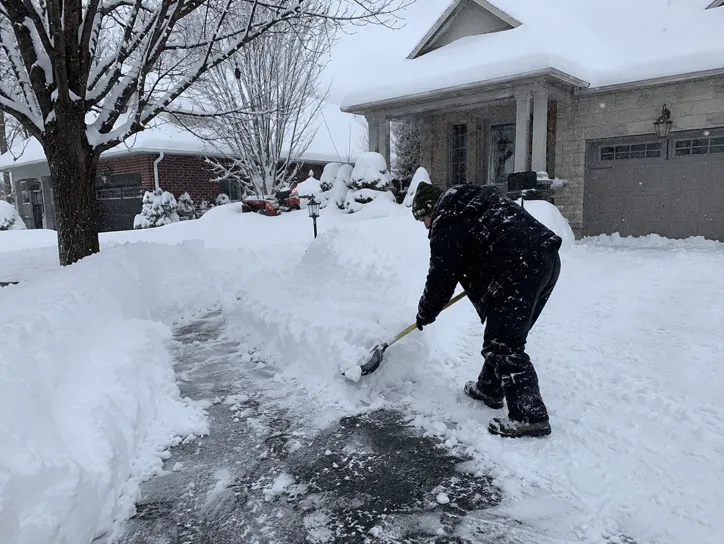
Snow hauling is a tool for dealing with limited storage capacity. It does not need to be the default response to every storm.
For many properties, the practical sequence is:
Store the snow safely when there is adequate space.
Relocate it when another suitable storage area is available.
Haul it away when the property no longer has enough practical capacity.
The goal is to maintain usable parking, access, visibility, and safe circulation throughout the winter without paying to remove snow that could have been managed effectively on-site.
Need commercial snow hauling in Ottawa?
If your commercial property is running out of snow-storage space, start with a site assessment.
Look at the amount of snow already on the property, remaining storage capacity, parking requirements, equipment access, drainage, and the logistics of loading and removing the snow.
When requesting a quote, ask the contractor to clearly explain:
- What will be removed
- How it will be loaded
- How many truckloads are expected
- Where the snow will be taken
- Whether transportation and disposal are included
- What equipment will be used
- What could change the price
- How quickly the work can be completed
A clear scope makes it easier to plan the work and compare proposals.
For Ottawa commercial properties, the objective is simple: keep the site usable through the winter while removing snow only when on-site storage is no longer a practical option.