Winter routes fill early - free written quotes within one business day
Plowed to bare surface Stall-count protection Relocation and hauling No snow pushed to the road

Parking Lot Snow Removal and Plowing in Ottawa

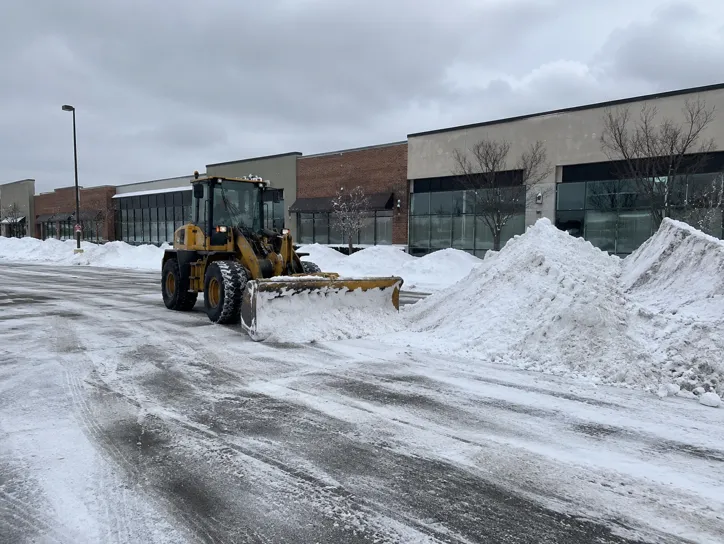
Snow Removals Ottawa – Parking lot snow removal in Ottawa is measured in stalls, not in passes, because every pile put in the wrong place costs you parking for four months. We plow to bare surface, place snow off the stall lines, keep catch basins open and salt the drive aisles.

Free written quotes
24/7 storm monitoring
Serving all of Ottawa
Time-stamped service logs

Get your free snow removal quote

Tell us about the property and we will reply with a clear written price.

What can we help with?

So the right crew reviews your project.

No obligation. We reply within one business day.

115 days Ottawa days with snow on the ground
21 cm Average mid-winter snowpack depth
2003-498 By-law banning snow pushed onto the road
14.2 days February days with 20 cm or more down

What parking lot snow removal in Ottawa includes

Plowed to bare surface, not to a packed layer

A lot cleared to a residual layer of packed snow looks finished at six in the morning and turns into a polished sheet after one freeze-thaw cycle. We plow down to asphalt so the de-icer works on the surface it is meant to work on. Packed snow also hides the painted lines your traffic pattern depends on, and drivers stop parking where you want them to.

Snow placed where it does not eat parking stalls

Every cubic metre has to land somewhere, and on most Ottawa lots the default landing spot is whichever row is nearest the plow. We map storage locations before the season: corner islands, dead landscape strips, the ends of runs with poor sightlines anyway. A pile in the wrong place costs you stalls from December through March, and stall-count loss is a real operating cost, not a cosmetic complaint.

Pusher boxes, blades and loaders matched to the lot

A pusher box moves large volume across open asphalt without spilling windrows sideways, which is what a big open lot needs. A straight or angled plow blade is what cuts close to curbs, islands and building faces. A skid steer or loader stacks and relocates. Using one tool for all three jobs is how lots end up with broken curbs, lost stalls and a spring repair bill.

Catch basins and lot drainage kept open

Meltwater has to reach a catch basin or it refreezes across the low corner of your lot, which in Ottawa happens over and over because the freeze-thaw cycle runs all winter and City projections point to more freeze events, not fewer. We keep basin locations clear of piles and treat the low points where run-off collects, so an afternoon thaw does not become a seven o'clock ice rink.

Curbs, line painting and surface protection

Plow blades take out curbs, wheel stops, bollards and freshly painted lines when the operator cannot see them under 30 cm of snow in the dark. Snow stakes go in before the first storm, blade shoes stay set for the surface, and pile locations are chosen away from painted areas. Repainting a lot in spring is a cost that gets blamed on winter but is caused by how the lot was plowed.

Snow relocation before you lose the back row

Ottawa holds at least 1 cm of snow on the ground for roughly 115 days a year and February alone averages 14.2 days with 20 cm or more down, so piles are cumulative rather than temporary. We schedule relocation and hauling to a snow disposal facility while the banks are still manageable, instead of after they have swallowed the back row and narrowed the fire route.

Ottawa by-laws

Where parking lot snow legally goes under By-law 2003-498

Use and Care of Roads By-law No. 2003-498, section 3(1)(b), prohibits throwing, pushing, plowing, dumping or otherwise depositing snow or ice on a highway. City employees and authorized agents are exempt; your contractor is not. So when a low bidder pushes your lot across the sidewalk and onto the street to save a stacking pass, the exposure lands on your property, not on the truck that drove away. We do not push your snow onto the road. On a constrained lot that means the storage plan is built before the season rather than improvised in the dark: which islands take volume, which run is sacrificed first, where the loader stacks so exit sightlines stay legal, and at what depth we stop stacking and start hauling to a snow disposal facility. Section 4(3) does allow sand or salt on icy portions of a road, which is a different thing entirely.
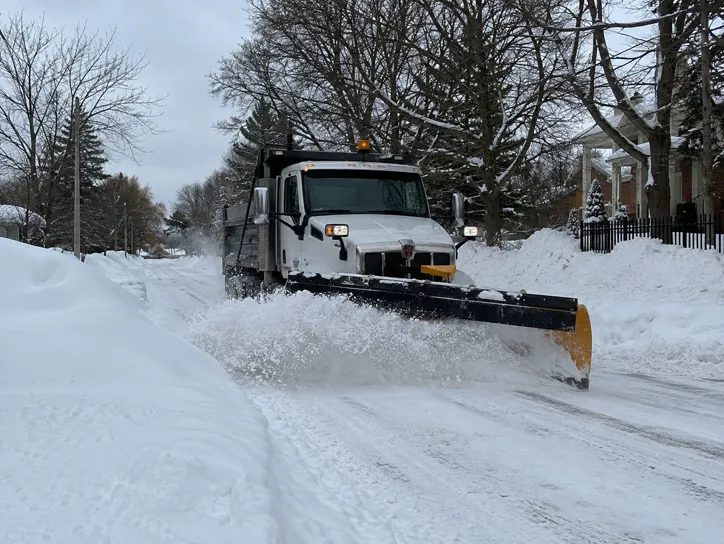
Commercial snow removal in Ottawa

What poor parking lot plowing costs an Ottawa property

Stalls lost to badly placed piles

A misplaced bank takes a row out of service for four months. Count the stalls, multiply by the months, and the cheap quote stops looking cheap.

Refreeze at the low corner

Blocked catch basins push meltwater to the lowest point in the lot, where it refreezes overnight and produces the exact patch a claim gets built on.

Curb, bollard and line damage

Blades that cannot see the edge find it anyway. Broken curbs, sheared wheel stops and scraped line painting all land on the spring budget.

Ice control

Salting drive aisles and stall rows on an Ottawa parking lot

Drive aisles and stall rows do not need the same treatment. Aisles carry turning traffic, braking at the exit and tires that polish compacted snow into a glaze, so they get de-icer first and get it more often. Stall rows sit undisturbed for hours and then release a person on foot straight into the aisle, which is why the transition strip between the two is where people actually fall. Product follows temperature: sodium chloride handles ordinary Ottawa cold, calcium chloride carries further down when a cold snap kills the brine reaction, and grit gives immediate traction where nothing chemical will act fast enough. February is Ottawa’s heaviest snowfall month at 47 cm against January’s 39 cm, and it is also when a lot has the least room left, so the salting schedule matters most exactly when the plowing is hardest.

Snow removal across Ottawa
Our Process

How an Ottawa parking lot goes on a plowing route

1

Lot survey and storage plan

We map stalls, aisles, catch basins, curbs, islands and fire routes, then decide where snow can go before the first storm rather than during it.

2

Markers and equipment set-up

Snow stakes mark curbs, islands and bollards, and blade and pusher configuration is matched to your surface so edges survive the season.

3

Storm passes on your trigger

Plowing runs on the accumulation trigger in your agreement, with drive aisles and entrances opened first and stall rows cleared as they empty.

4

Relocation and haul-off

When banks reach the depth agreed in the contract, a loader relocates the piles or trucks them off site to a snow disposal facility.

Parking lot and commercial snow services in Ottawa

Talk to the crew about this property

Send us the stall count, the surface plan and the hours the lot has to be open, and we will price the plowing and the salting separately.

Call (343) 326-3526

Parking lot snow removal in Ottawa – FAQs

Where does the snow from our parking lot end up?

On your property first, in storage locations agreed before the season, then off site by loader and truck once the banks get too big to hold. What it never does is go onto the road. By-law No. 2003-498, section 3(1)(b), prohibits depositing snow or ice on a highway, and the exemption for City agents does not cover a private contractor working your lot.

How many parking stalls does a winter of snow storage usually cost?

That depends entirely on where the piles are placed, which is why we plan storage before the first storm. Ottawa keeps snow on the ground for roughly 115 days a year with a mid-winter pack near 21 cm, so piles grow all season instead of melting between events. Storage on islands and dead strips, plus relocation at an agreed depth, is what keeps rows in service.

Do you plow the lot to bare pavement or leave a base layer?

To bare pavement wherever the surface allows it. A base layer of packed snow gets polished by tires and then glazes on the next freeze-thaw cycle, and it hides the painted lines that keep your traffic pattern working. Clearing to the surface also means de-icer acts on asphalt rather than being wasted melting a layer that should not have been left there.

Will plowing damage our curbs, bollards and line painting?

Not if the lot is staked and the equipment is matched to it. Snow stakes mark curbs, islands, wheel stops and bollards before the first storm, blade shoes are set for the surface, and pile locations are kept clear of painted areas. Most curb and line damage happens when an operator is guessing at edges under deep snow in the dark.

Do you salt the whole lot or only the walkways?

Both are priced, and they are treated differently. Drive aisles, entrances and exits take the turning and braking traffic, so they get de-icer first and most often. Walkways and the transition strip between stall and aisle are where people are actually on foot. Product is chosen by temperature, with grit used where chemical de-icer will not act fast enough to matter.

Get your Ottawa parking lot on a plowing contract

Free lot survey, a written storage plan and separate pricing for plowing, salting and haul-off.

Back to top