Winter routes fill early - free written quotes within one business day
Loaders and pusher boxes Dock and yard clearing Shift-change timing Off-site hauling

Industrial Snow Removal in Ottawa for Yards, Loading Docks and Warehouse Lots

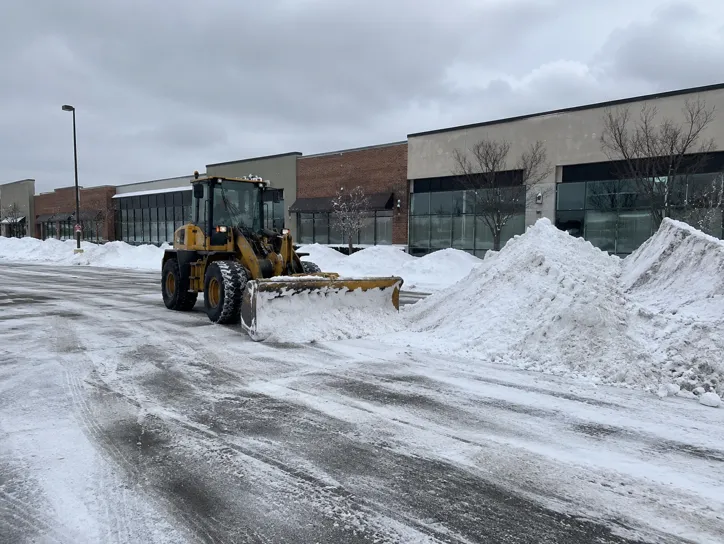
Snow Removals Ottawa – A tractor-trailer needs a full turning radius and a dock apron cleared to bare pavement before it can back in, and a big yard fills faster than any truck plow can move it. We clear Ottawa industrial yards, docks, container pads and employee lots with loaders and pusher boxes, and haul the snow out when the yard fills.

Free written quotes
24/7 storm monitoring
Serving all of Ottawa
Time-stamped service logs

Get your free snow removal quote

Tell us about the property and we will reply with a clear written price.

What can we help with?

So the right crew reviews your project.

No obligation. We reply within one business day.

21 cm Average mid-winter snowpack
14.2 days February days with 20 cm or more down
5 cm Trigger before a minor collector is cleared
60 days Notice window on an injury claim

What Industrial Snow Removal in Ottawa Has to Handle

Loading docks and dock levellers

A dock apron has to come down to pavement rather than to a packed layer, because a leveller will not seat on ice and a trailer parked on a ridge sits at the wrong height for the plate. Dock faces, bumpers and the drive-in approach are cleared on every visit.

Turning radii wide enough for tractor-trailers

A 53-foot trailer needs its full swing to back into a dock, and a bank left at the corner of the apron quietly takes that radius away until drivers start jackknifing. Yard corners, islands and pinch points are cut back with a bucket rather than rounded off by a blade.

Yard storage areas, container pads and trailer parking

Container pads, laydown areas and trailer spots have to stay usable through February or your yard capacity drops at the worst possible point in the season. Those areas are on the site plan as working surfaces, not treated as convenient overflow stacking space.

Gates, fence lines and security access

Sliding and swing gates jam on packed snow, and a fence line loaded to the rail is what starts pushing panels out of plumb. Gate tracks, gate approaches and fence lines are cleared so access control and your perimeter both keep working through the winter.

Heavy equipment sized to the actual volume

Loaders and pusher boxes move yard volumes a truck plow cannot touch, and skid steers handle dock faces, islands and tight corners. Matching machine to surface is what keeps a large yard on schedule during a multi-day event instead of falling a storm behind.

Drainage and where the meltwater ends up

On a large paved yard, a pile in the wrong place drains across the drive lane and refreezes overnight into the exact surface your forklifts and drivers work on. Stacking locations are chosen against your catch basins and grade so meltwater runs to a drain, not across a dock approach.

Ottawa yards

Why Ottawa Industrial Yards Run Out of Snow Storage by February

An industrial yard in Ottawa never gets a reset between storms. Snow lands on snow: there are 115 days a year with at least 1 cm on the ground, the mid-winter snowpack averages 21 cm, and February alone averages 14.2 days with 20 cm or more already lying while adding another 47 cm, more than January’s 39 cm. On a multi-acre yard that is thousands of cubic metres with nowhere to go but up, and every bank you build takes a trailer spot, a container pad or a sightline with it. City service standards do not rescue you either. Highway 174, the Transitway and arterials are cleared within 2 to 4 hours, but the minor collector feeding your gate only triggers at 5 cm with up to six hours allowed, and during a declared Significant Weather Event those timelines are suspended entirely. The trucks still show up on schedule.
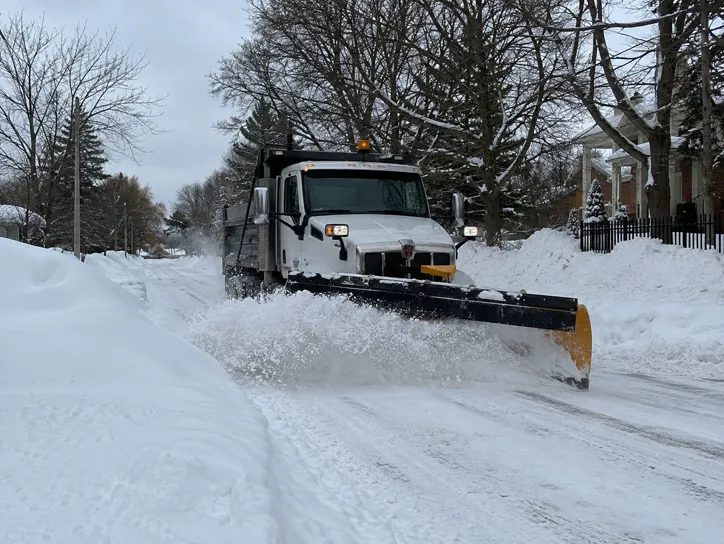
commercial snow plowing services in Ottawa

Industrial Snow Clearing Built for Ottawa Warehouses and Yards

Docks cleared to pavement

Dock aprons, faces and approaches are cleared down to the surface so levellers seat properly and trailers sit at the height the plate was designed for.

Yard capacity protected

Container pads, laydown areas and trailer parking are cleared as working surfaces, so your yard holds the same number of units in February as it does in October.

Snow hauled out, not stored

When stacking room runs out we load the piles and truck them off site, instead of letting banks eat drive lanes and turning radii for the rest of the winter.

Shift change and liability

Employee Lots, Shift Change and Industrial Snow Liability in Ottawa

Shift change is the part of an industrial contract most quotes ignore. A yard can be perfectly plowed at four in the morning and still put a couple of hundred people across a refrozen employee lot at three in the afternoon, which is where the injury claims actually come from. Ontario’s Occupiers’ Liability Act makes whoever controls the premises responsible for the safety of everyone on it, employees and visiting drivers included, and an injured person has 60 days to serve written notice. Two months later the only usable account of that afternoon is a time-stamped service log showing which surfaces were cleared and treated and when. So employee lots and the walking route between the lot and the plant door are written into the scope as named surfaces with their own timing tied to your shift pattern, and yard snow is never pushed out onto the road, which By-law No. 2003-498, s.3(1)(b) prohibits.

Snow removal across Ottawa
Our Process

How an Industrial Snow Removal Contract Runs in Ottawa

1

Site plan and stacking plan first

We mark docks, turning radii, container pads, gates, catch basins, fire routes and employee lots, then agree where snow stacks and how much room that gives you.

2

Triggers and equipment assigned to the yard

Trigger depths are set per surface and loaders, pusher boxes and skid steers are assigned so the yard is cleared at the volume it actually produces.

3

Docks and lanes first, then the open yard

Dock aprons, drive lanes and gates open first so trailers keep moving, then the open yard, then employee parking and walkways timed to shift change.

4

Haul between storms and log every visit

When banks start taking working surfaces we schedule a haul in the gap between events, and every visit is recorded with time, surfaces and product used.

Commercial and Industrial Snow Services Across Ottawa

Talk to the crew about this property

Call with your yard size, dock count and shift times and we will build the clearing plan around them.

Call (343) 326-3526

Industrial Snow Removal in Ottawa FAQs

Do you use loaders or truck plows on an industrial yard?

Both, assigned by surface. Truck plows are efficient on drive lanes and access roads, but a multi-acre yard produces volumes that only a loader with a pusher box can move at a workable rate, and skid steers handle dock faces, islands and tight corners. Sizing the equipment to the yard is what keeps clearing inside a shift rather than a day behind.

How do you keep loading docks usable during a storm?

Dock aprons are cleared first and cleared to pavement, not to a packed layer, because a leveller will not seat on ice and a trailer sitting on a ridge is at the wrong height for the plate. During a long event we run repeat passes on dock faces and turning areas so a trailer arriving mid-storm can still back in and unload.

Where do you stack snow on a large paved yard?

In locations agreed before the season and marked on the site plan, chosen against your grade and catch basins so meltwater drains rather than running across a dock approach and refreezing overnight. Piles are kept off container pads, trailer spots, fire routes and turning radii, and they never go against a fence line where the load pushes panels out.

Can you work around shift changes?

Yes, and the employee lot is scheduled separately from the yard for exactly that reason. A yard cleared at four in the morning tells you nothing about the state of the employee lot at afternoon shift change, so parking areas and the walking route to the plant door are treated as named surfaces with their own timing and their own ice control.

What happens when the yard has no stacking room left?

We move to hauling. Once banks start taking trailer spots, blocking turning radii or draining across working surfaces, pushing further into the corner stops being useful. A loader feeds trucks that take the snow off site to a snow disposal facility, and the haul is scheduled in the window between storms so your yard is back to full capacity before the next accumulation.

Get Industrial Snow Removal in Ottawa

Book a yard walk and we will map docks, stacking locations and haul triggers before the season starts.

Back to top