Winter routes fill early - free written quotes within one business day
Rideau-Jock routes Heritage core and new builds Interlock-safe clearing Free written quotes

Snow Removal in Richmond Village, Rideau-Jock Ward

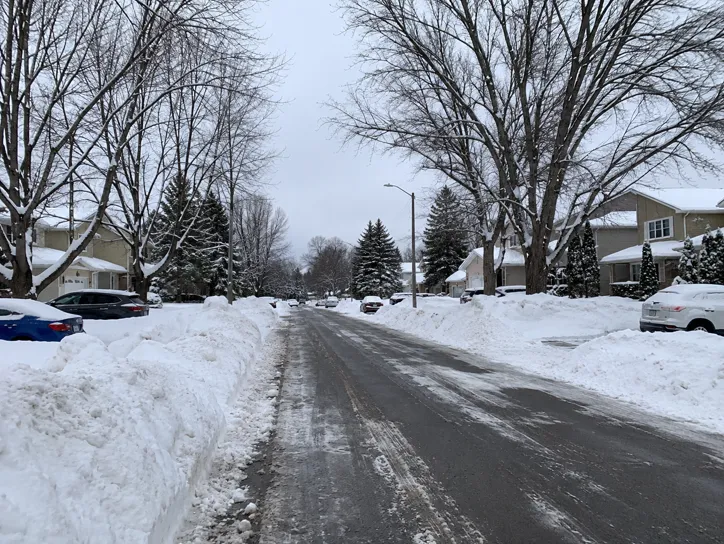
Snow Removals Ottawa – Richmond is a historic village with new subdivisions built onto the edge of it, and the two halves need opposite things from a snow contractor. The old core has tight frontages and no stacking room; the new streets have fresh interlock and grading that has not finished settling.

Free written quotes
24/7 storm monitoring
Serving all of Ottawa
Time-stamped service logs

Get your free snow removal quote

Tell us about the property and we will reply with a clear written price.

What can we help with?

So the right crew reviews your project.

No obligation. We reply within one business day.

47 cm February snowfall average, Ottawa's heaviest month
39 cm January average, lighter than February
7 cm Trigger before a village street is plowed
5 cm Trigger for residential sidewalks, cleared in 12-16 hours

What Snow Removal in Richmond Has to Account For

Heritage frontages on Perth Street and the old core

In the original village the houses sit close to the street on narrow frontages, and driveways are short, often single width, and squeezed between a house and a lot line. There is no deep front lawn to absorb four months of piles. On these properties the whole conversation is where the snow goes, and it has to be settled before the first storm rather than in February.

New subdivision lots where the grading has not settled

On the newer streets built onto the village edge, the sod is young, the grading is still moving and the interlock has not gone through many freeze-thaw cycles yet. Driveway markers matter more here than anywhere else in Richmond, because the edge between a paver apron and new sod is invisible under snow and expensive to find with a blade.

Fresh interlock that a badly set blade will lift

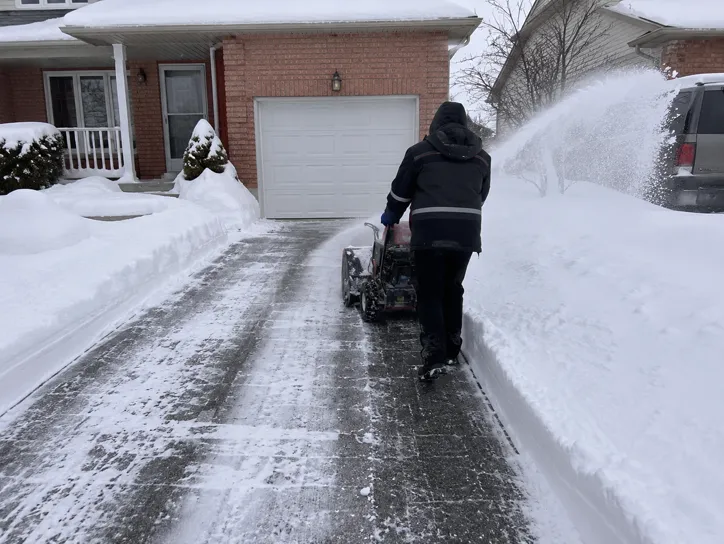
New pavers sit on a bed that has not locked in yet. A blade dropped to bare stone catches an edge, and one lifted paver becomes a row of them. Interlock driveways are cleared to a thin remaining layer rather than scraped to the surface, and the de-icer chosen for the walkways is chosen with the pavers and the concrete steps in mind.

Village streets that still wait for the 7 cm trigger

Being a village does not buy Richmond a different service standard. Residential streets here are plowed like every other residential street in the city: nothing until 7 cm has accumulated, then a 10 to 16 hour window, and no timelines at all once a Significant Weather Event has been declared. Roughly half of Ottawa's snow events never reach that trigger.

Low ground toward the Jock River that refreezes overnight

Where the ground falls away toward the Jock River corridor, meltwater from a mild afternoon collects and then refreezes as soon as the temperature drops back. That is a traction problem rather than a snow problem, and it is why properties on the low side get ice control planned into the seasonal scope rather than treated as an occasional call-out.

Two villages in one

Why Richmond Needs Two Different Snow Clearing Approaches

Drive from the old core out to the newer streets on the edge of the village and you pass between two entirely different snow removal problems in about a minute. In the historic part, frontages are narrow, houses sit forward on the lot and driveways are short and hemmed in, so the constraint is storage: with 115 days a year carrying at least 1 cm on the ground, the pile from the first storm is still there at the end. On the new subdivision streets there is more room, but the surfaces are young. Fresh interlock, new sod and grading that is still settling punish a contractor who clears by feel. Same village, same ward, opposite technique. Richmond addresses are scoped individually for that reason rather than being handed a standard suburban driveway package.
all the Ottawa areas on our winter map

How Richmond Driveways Are Cleared Without Surface Damage

Markers on unsettled edges

New sod, paver aprons and soft shoulders get staked before winter so the clearing line is not guessed at under snow.

A thin layer left on interlock

Pavers are cleared to a remaining layer rather than scraped to stone, which is how joints and edges survive their first winters.

Pile planning in the old core

Short heritage frontages get a designated stacking spot and a relocation trigger, because there is nowhere to put a fifth month of snow.

Rideau-Jock

Village Lots and Farm Laneways on the Same Richmond Route

Richmond sits in a rural ward, and the route that serves the village also serves the country properties around it, where a laneway can run several hundred metres between open fields. Those are different machines and different pricing, but they share one scheduling reality: rural roads and lanes sit low on the City’s priority ladder, well behind arterials that are cleared from the start of accumulation. A property outside the village can be perfectly cleared and still be waiting on the road at the end of it. Inside the village the arithmetic is different but the conclusion is the same. Ottawa averages 52 days a year with measurable snowfall, and on a seasonal contract that works out to roughly $9 to $11 per clearing against $80 to $140 for calling someone out one storm at a time.

Snow removal across Ottawa
Our Process

Preparing a Richmond Property for the Winter

1

Identify the surface before the quote

Asphalt, fresh interlock, concrete or gravel all get cleared differently, so the surface is recorded at scoping.

2

Stake the edges and the soft ground

New sod, paver aprons and unsettled shoulders are marked while the boundary between them is still visible.

3

Decide the stacking spot

Heritage frontages get a designated pile location and a point at which the snow has to be relocated instead.

4

Add ice control on the low ground

Properties on the falling ground toward the Jock River get de-icer and grit written into the seasonal scope.

Snow Removal Services for Richmond Homes and Laneways

Talk to the crew about this property

Call and tell us whether you are in the old core or on the new streets, and we will scope it the right way.

Call (343) 326-3526

Richmond Snow Removal FAQs

Do you serve both the old village core and Richmond's newer subdivisions?

Yes, on the same Rideau-Jock route, but they are quoted as different jobs. The old core is a storage problem: short frontages, narrow driveways and nowhere to put four months of snow. The newer streets are a surface problem: fresh interlock, young sod and grading that is still moving. The technique that suits one will damage the other.

My house in the core sits right on the street. Where does the snow actually go?

Onto a designated spot on your own property, chosen in the fall for sightlines at the road and for where meltwater will run when it thaws. It does not go onto the street. By-law No. 2003-498, s.3(1)(b) prohibits depositing snow or ice on a highway. When the chosen spot fills up, the pile is relocated on site or hauled away rather than stacked higher.

Our interlock and sod are brand new. How do you avoid tearing them up?

By marking the edges before they disappear and by not clearing to bare stone. A blade dropped flat onto young pavers catches a raised edge and lifts it, and the same pass takes the sod beside it. Markers define the clearing line, a thin layer is left on the pavers, and the de-icer used near the steps is chosen with the concrete and joints in mind.

Does the Jock River affect snow clearing in Richmond at all?

Indirectly, through drainage. On the ground that falls away toward the river corridor, meltwater from a mild afternoon pools and then refreezes overnight when the temperature drops back. That turns a cleared driveway into a traction problem without any new snow falling, which is why the low-side properties get grit and de-icer built into the seasonal scope.

Are village streets in Richmond plowed sooner because the village is small?

No. Priority is set by road class, not by community size. Arterials are cleared from the start of accumulation, minor collectors at 5 cm, and residential streets and lanes only once 7 cm has accumulated, then within a 10 to 16 hour window. When a Significant Weather Event is declared, those timelines stop applying to any of it.

Book Snow Removal in Richmond

Get a written seasonal price scoped to your surface, your frontage and where the snow can actually go.

Back to top