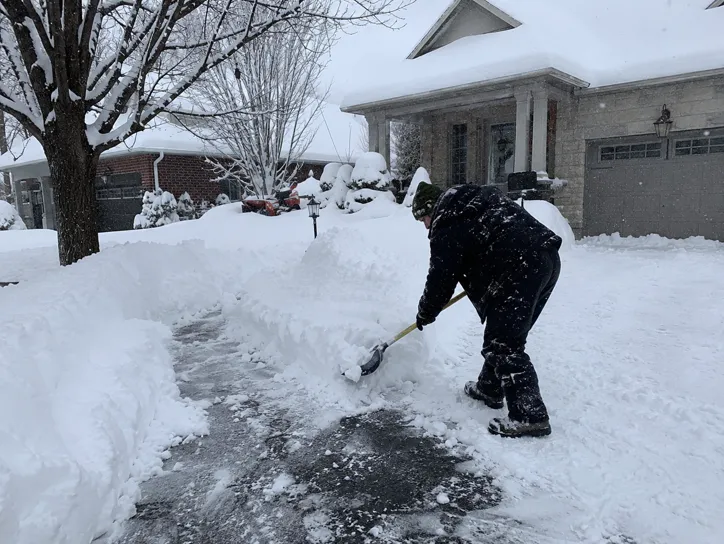
Winter routes fill early - free written quotes within one business day
Rubber and poly cutting edges Shoes set high, thin skim left Chloride-free de-icer options Paver borders marked in fall

Interlock Snow Removal in Ottawa Without Lifting Pavers

Snow Removals Ottawa – Interlock is the one driveway surface a standard steel plow blade can genuinely wreck, and rock salt finishes what the blade starts by attacking the pavers, the jointing sand and the concrete steps beside them. We clear interlock with rubber or poly edges, shoes set high and de-icers chosen for the surface rather than the price.

Free written quotes
24/7 storm monitoring
Serving all of Ottawa
Time-stamped service logs

Get your free snow removal quote

Tell us about the property and we will reply with a clear written price.

What can we help with?

So the right crew reviews your project.

No obligation. We reply within one business day.

115 days A year with at least 1 cm on the ground
33% More winter freeze events projected for the 2050s
52 days With measurable snowfall in a typical year
47 cm February snowfall, ahead of January's 39 cm

How Interlock Snow Removal in Ottawa Protects Pavers and Joints

A steel blade catches an edge and lifts pavers

Interlock is not a monolithic slab, it is hundreds of separate units held in place by friction and jointing sand. A steel cutting edge riding across it will eventually catch the lip of a paver that has settled a millimetre or two proud of its neighbour, and once one is lifted or tipped the surrounding units lose their restraint. Rubber or poly cutting edges ride over that lip instead of catching it.

Shoes set high and a thin layer left behind

Scraping decorative stone down to bare surface is where damage happens. Plow shoes and skids are set high so the edge never rides directly on the pavers, and a thin layer of packed snow is deliberately left in place as a wear surface. It is then treated for traction rather than chased with a blade, which is the difference between a clean driveway and a repointed one.

Snowblowers preferred over blades on decorative surfaces

A snowblower with the auger housing set above the surface removes the volume without applying lateral force to the pavers at all. On interlock walkways, front entries, small pads and steps, that is almost always the right tool, and it also avoids the piling and dragging that pushes sand out of the joints and drags grit across the face of the stone.

Rock salt kept off pavers, jointing sand and concrete

Sodium chloride and other chlorides draw moisture into the paver body and into the concrete of steps, porches and garage aprons, then drive salt crystallisation and repeated micro freeze-thaw inside the pore structure. That produces efflorescence on the face and spalling at the edges, and it washes the polymeric or fine sand out of the joints so the units start moving.

The border of the interlock marked before the first snow

Once there is 20 cm on the ground, nobody can see where the pavers stop and the lawn, garden bed or asphalt apron begins. Markers go in along the border while it is still visible, so an operator working at night knows exactly which surface is under the snow and does not run a blade off the edge of the pad or into the soldier course.

How the damage happens

What Ottawa Freeze-Thaw Cycles Do to an Interlock Driveway

Ottawa carries snow on the ground about 115 days a year, and the City’s own climate work projects roughly a third more winter freeze events by the 2050s, with winter temperatures sitting near zero more often. For interlock that is the worst possible pattern. Meltwater runs into the joints during the thaw, freezes overnight and expands, and each cycle lifts the units a fraction and loosens the sand that holds them. Add a steel blade dragging across a surface that is now slightly uneven and the failure sequence is complete: an edge catches, a paver tips, the joint opens, more water gets in. This is why we clear interlock with rubber or poly edges, set the shoes high, leave a thin skim rather than scraping to bare stone, and keep the joints out of the freeze-thaw loop wherever we can.
Ottawa residential snow removal

Interlock-Safe Clearing and De-Icing Choices in Ottawa

Non-metallic cutting edges

Rubber or poly edges and high-set shoes ride over settled pavers instead of catching them, so the restraint holding the field together is never broken.

De-icers matched to the surface

Where chloride is the wrong answer, we use grit for mechanical traction or a paver-appropriate de-icer rather than defaulting to bulk rock salt.

Marked borders and soldier courses

Markers along the paver edge mean the operator knows where the interlock ends before the snow buries it, at night, in blowing snow.

Salt and stone

Why Rock Salt Is the Wrong De-Icer for Ottawa Interlock and Steps

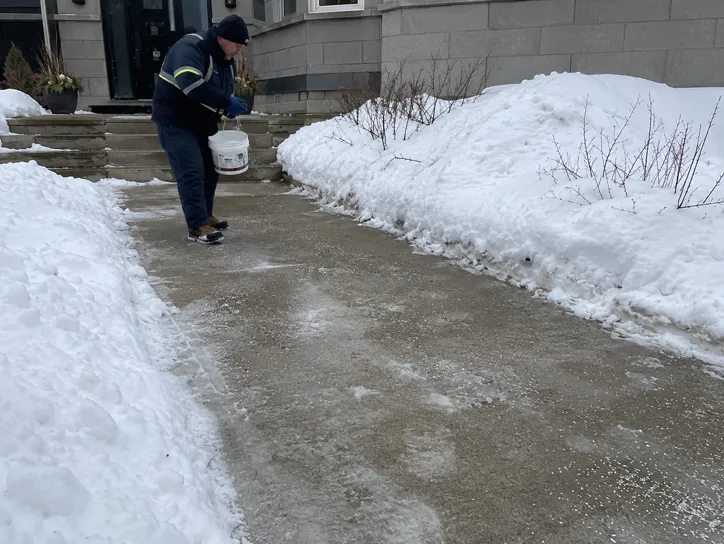
Rock salt is cheap because it is bulk sodium chloride, and bulk chloride is exactly what a paver, a jointing sand line and a poured concrete step do not want. Chloride keeps the surface wet, pulls moisture into the pore structure, and then cycles it through freezing and thawing inside the material. The visible results are efflorescence, the white bloom that comes up through the face of the stone, and spalling, where the surface flakes off the nose of a step or the edge of a slab. Brine running along the joints also carries fine sand away, and once a joint is empty the unit alongside it starts to rock. On interlock we lean on grit for traction, on chloride-free de-icers where melting is genuinely needed, and on clearing early so ice never bonds in the first place.

Snow removal across Ottawa
Our Process

How We Clear an Interlock Driveway in Ottawa

1

Map the paver footprint in the fall

We mark the border of the interlock, the soldier course, steps, garden edges and anything that projects, while the whole surface is still visible.

2

Set edges and shoes for stone

Rubber or poly cutting edges go on and the shoes are set high, so the working edge floats above the pavers rather than scraping across them.

3

Clear with a blower where it fits

Walkways, entries and tight pads are cleared with a snowblower set above the surface, which removes volume without pushing the units sideways.

4

Treat for traction, not for bare stone

The thin remaining layer is gritted or treated with a de-icer suited to the surface, instead of being chased down to bare pavers with a blade.

Interlock and Decorative Surface Snow Services Across Ottawa

Talk to the crew about this property

Call about your pavers, your steps and where the salt damage already shows, and we will set the driveway up properly.

Call (343) 326-3526

Interlock Snow Removal in Ottawa FAQs

Will a plow damage my interlock driveway?

A steel blade on interlock will, given enough passes. Pavers settle unevenly, and a steel edge eventually catches the lip of one that sits proud, tipping it and releasing the restraint on the units around it. Rubber or poly cutting edges with the shoes set high ride over that lip instead of catching it, and a snowblower applies no lateral force to the field at all.

Why leave a thin layer of snow on interlock instead of scraping to the stone?

Because the last few millimetres are where the damage lives. Getting down to bare pavers means running the cutting edge directly on the stone and across every joint, which chips faces, drags sand out and catches settled units. A deliberate thin layer acts as a wear surface, and traction is then handled with grit or an appropriate de-icer rather than with more blade pressure.

Is rock salt safe on interlocking pavers and concrete steps?

It is the wrong default. Sodium chloride keeps the surface wet, draws moisture into the pore structure of pavers and poured concrete, and then cycles it through freezing inside the material. That is what produces spalling on the nose of a step and efflorescence across a paver face, and brine running along joints carries the jointing sand away with it. Grit or a chloride-free de-icer is the better answer.

What is the white powdery bloom on my pavers after winter?

Usually efflorescence: soluble salts moving through the paver with water and depositing on the face as the water evaporates. Some of it is natural to concrete products, but heavy repeat blooming on a driveway that gets bulk rock salt every winter is a sign that chloride and moisture are cycling through the units. Reducing chloride exposure is the practical fix, alongside keeping joints full.

How do you know where the interlock ends once it snows?

We mark it. Markers go along the border of the paver field, the soldier course and any garden or lawn edge before the first accumulation, while the whole footprint is still visible. After 20 cm has fallen and the light is bad, that line is the only thing separating a clean pass from a blade dropping off the edge of the pad into sod or a garden bed.

Book Interlock Snow Removal in Ottawa

Send photos of your pavers, steps and borders and we will set the equipment and de-icer choice around them.

Back to top