Winter routes fill early - free written quotes within one business day
Depth and drift mapping Interior warning-sign review Load reduction, not engineering Flat and low-slope roofs

Roof Snow Load Assessment and Drift Checks in Ottawa

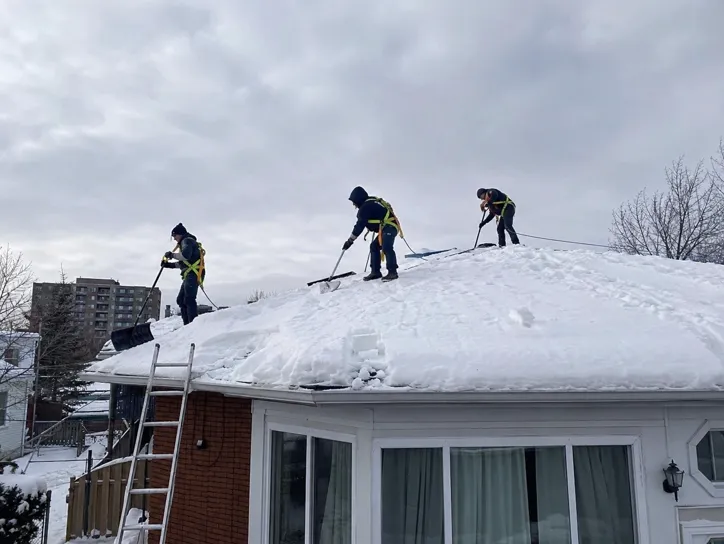
Snow Removals Ottawa – We assess and reduce the snow load on your roof by reading what is actually up there, which means drift depth, where it has piled and the warning signs showing inside the building. We do not perform structural engineering assessments, and anything past the visible signs goes to a licensed engineer.

Free written quotes
24/7 storm monitoring
Serving all of Ottawa
Time-stamped service logs

Get your free snow removal quote

Tell us about the property and we will reply with a clear written price.

What can we help with?

So the right crew reviews your project.

No obligation. We reply within one business day.

14.2 days February days with 20 cm or more down
21 cm Average mid-winter snowpack
115 days Days a year with snow cover in Ottawa
4 signs Visible overload signals we check for

What a roof snow load assessment in Ottawa covers

Depth and drift measured across the roof, not at one point

Load is never even. Wind strips the exposed slope and deposits it behind ridges, dormers, parapets, roof-top units and against any wall standing above the roof plane. We probe depth at multiple points and record where the snow has actually collected, because the deep corner is the number that matters and a single average across the roof is the number that misleads people.

The visible overload warning signs, checked inside and out

Sagging in the roof line or a new dip where the plane used to be straight, fresh cracks in ceilings or interior walls appearing during a heavy-snow stretch, doors and windows that suddenly stick in frames that worked in the fall, and new or repeating popping and creaking under load. Any one of those ends the snow conversation and starts an engineering one.

Additions, carports, porches and sunrooms checked separately

Attached structures are frequently framed to a lighter standard than the house they are bolted to, and they also sit under whatever slides off the main roof above them. A carport, a covered porch, a rear addition or an aluminum sunroom can be carrying the main roof's snow on top of its own accumulation, which is a very different situation from the house itself.

Low-slope and flat commercial roofs and their drift traps

A flat or low-slope commercial roof holds everything that lands on it, and the parapets that keep the membrane tidy also stop wind from clearing it. Drifts build against parapet walls, mechanical curbs, screen walls and any step in roof height. Blocked roof drains and scuppers then turn a thaw into standing water sitting on top of the snow.

A written record of what we found and what we cleared

You receive depths, drift locations, the interior signs we could see, photographs and a description of the reduction we performed. If the finding is a structural question rather than a snow question, that is written down too, along with a plain recommendation to bring in a licensed engineer before the building goes back to normal use.

The Ottawa load problem

Why Ottawa roofs gain snow load fastest during rain on snow

The dangerous days here are not always the biggest snowfalls. Ottawa carries snow on the ground on roughly 115 days a year, the mid-winter pack averages about 21 cm, and February averages 14.2 days with 20 cm or more sitting there. That base is already in place when a warm front arrives carrying rain instead of snow. The snowpack absorbs the rain the way a sponge does, mass climbs sharply over a few hours while depth barely changes, and then the temperature falls behind the system and the saturated layer freezes into a slab that no wind will move and no roof will shed. Freezing rain does the same thing and seals a glaze over the top. If a building has ever creaked during a February thaw, that is the mechanism, and it is why we look at roofs after warm wet weather rather than only after a storm.
Roof snow removal services in Ottawa

Where a roof snow load assessment stops and an engineer starts

What we do

We probe depth, map drifting, look for the visible warning signs and reduce the load by removing snow. That is a maintenance judgement, and we document every part of it.

What we do not do

We do not perform structural engineering assessments and we give no opinion on your roof's capacity. No number a snow crew could produce would be worth relying on.

When it goes to an engineer

Sagging, new cracking, sticking doors or repeated creaking means a licensed engineer working from the Ontario Building Code and MMAH Supplementary Standard SB-1, not a snow crew.

Judgement call

When an Ottawa property owner should book a snow load assessment

The honest answer is not a depth, it is a set of circumstances. A roof that has taken three or four storms with no thaw between them. A building with a long unbroken low-slope span, such as a warehouse, an arena or a shop. A rear addition or carport framed lighter than the house it attaches to. A roof with a history of leaks at the eave. And any roof where the owner has started hearing something new from the structure. Add a rain-on-snow event or a freezing rain event to any of those and the case is made. Commercial and institutional owners carry a second reason: By-law No. 2005-208 requires owners and occupants to keep roofs and the surrounding lands free of snow and ice hazards, with no timeframe attached, which puts the timing judgement squarely on the owner.

Snow removal across Ottawa
Our Process

How we assess and reduce roof snow load in Ottawa

1

Interior walk and building history

We start inside with the ceilings, the door frames and what you have heard, then ask what the roof is: framing, span, additions and any past leaks.

2

Depth, drift and drainage from the roof

Depth is probed at several points, drift locations are photographed, and drains, scuppers and valleys are checked for whether meltwater can actually leave.

3

Reduce the load where it is concentrated

We take the drifts down first, working in stages and leaving a protective layer rather than scraping down to the membrane or the shingle.

4

Written findings, and an engineer if warranted

You receive the record. If a structural warning sign was present, the report says so and says to bring in a licensed engineer before further use.

Roof snow services related to load assessment in Ottawa

Talk to the crew about this property

Tell us the roof type, the span and what you have noticed inside the building, and we will tell you whether this is a snow job or an engineering one.

Call (343) 326-3526

Roof snow load assessment in Ottawa – FAQs

Do you provide a structural engineering assessment of my roof?

No. We assess and reduce snow load as a maintenance service. We probe depth, map drifting, look for visible warning signs and remove snow to bring the load down. We do not calculate capacity and we do not issue an engineering opinion. Anything beyond the visible signs belongs with a licensed engineer, who works from the Ontario Building Code and MMAH Supplementary Standard SB-1.

What are the warning signs that a roof is carrying too much snow?

Sagging or a new dip in the roof line, fresh cracks appearing in ceilings or interior walls during a heavy-snow stretch, doors and windows that suddenly stick in frames that worked in the fall, and new or repeating popping and creaking under load. Those are signals to get people out and get a professional opinion, not signals to climb up with a shovel.

Why does snow depth on one part of the roof matter more than the average?

Because wind never distributes it evenly. It scours the exposed slope and drops the material in the lee of ridges, dormers, parapets, roof-top units and taller adjacent walls. A drift can be several times the depth of open roof a few metres away. Load is a local number, so an assessment reporting one depth for a whole roof has not really told you anything.

Does rain falling on top of snow really change the load that much?

Yes, and faster than another snowfall would. The existing pack absorbs the rain rather than shedding it, so mass climbs within hours while depth barely moves. When temperatures fall behind the system, that saturated layer freezes into a dense slab that will not blow off and will not slide. Freezing rain adds a sealed glaze over the same problem.

Are additions, carports and sunrooms a different risk from the main roof?

Often, yes. Attached structures are frequently framed to a lighter standard than the house, and they sit directly under whatever sheds off the main roof above them. A carport or sunroom can end up carrying its own accumulation plus a slide load it was never designed to see. We look at them as separate structures during the assessment.

Book a roof snow load assessment in Ottawa

We measure, document and reduce the load, and we say plainly when the question belongs to an engineer.

Back to top