Winter routes fill early - free written quotes within one business day
Seasonal or per-event Time-stamped service logs 24/7 storm response Free site walk-through

Commercial Snow Removal Across Ottawa

Snow Removals Ottawa – Commercial snow removal in Ottawa is a liability job before it is a plowing job, because the Occupiers’ Liability Act puts the duty of care on whoever controls the premises. We clear lots, walkways and entrances on written triggers and response windows, and we time-stamp every visit.

Free written quotes
24/7 storm monitoring
Serving all of Ottawa
Time-stamped service logs

Get your free snow removal quote

Tell us about the property and we will reply with a clear written price.

What can we help with?

So the right crew reviews your project.

No obligation. We reply within one business day.

60 days Notice window on a slip-and-fall claim
52 days Ottawa days with measurable snowfall
47 cm February snowfall, the heaviest month
2.5 cm City trigger on downtown sidewalks

What a commercial snow removal contract in Ottawa covers

Written trigger thresholds and response windows

Your contract names the accumulation that starts a visit and the window we have to finish it, in writing, before the season opens. The City works to a 7 cm trigger and a 10 to 16 hour window on residential streets, and roughly half of Ottawa's snow events never reach that threshold at all. A commercial site cannot wait on either number, so most sites sit well below it with a much tighter response window.

Time-stamped service logs on every visit

Every plow, shovel, salt and haul is recorded with date, time in, time out, services performed and conditions observed. Under the 60-day written notice rule you will often hear about a fall two months after it happened, when nobody on site remembers the weather that afternoon. The log is what remembers it for you, and it is the only evidence that does not depend on recollection.

Parking areas and drive aisles plowed to bare surface

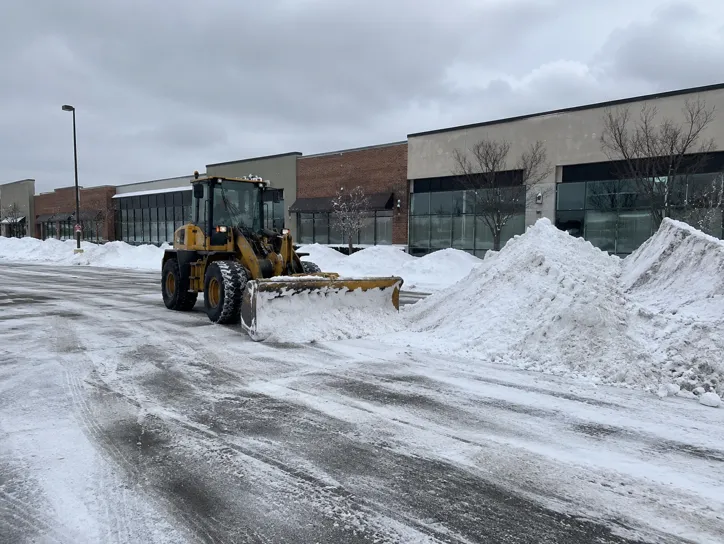
Lots, laneways, loading areas and drive aisles are plowed down to the surface rather than to a packed layer that turns glassy on the next freeze-thaw cycle. Pusher boxes move volume across open asphalt, blades cut close to curbs and islands, and a loader stacks the piles where they will not take out stalls or sightlines for the rest of the winter.

Walkways, entrances and accessibility ramps by hand crew

Sidewalks, steps, entrance aprons and accessibility ramps are cleared by hand crews and treated, not left to the plow. This is where slip-and-fall exposure actually sits, because it is the path a person walks from the vehicle to the door. Ramps and landings get treated first, since a graded surface with ice on it removes the option of stopping.

Salting, brine and ice control on a defined schedule

Sodium chloride, calcium chloride and grit are chosen by surface and temperature rather than by habit. City of Ottawa projections point to about a third more winter freeze events by the 2050s, which means more freezing rain, more meltwater refreezing and more flash freeze. Ice control is the part of a commercial contract that grows, not the part to trim when the budget is tight.

Snow relocation and hauling before the piles cost you space

Ottawa carries at least 1 cm of snow on the ground on roughly 115 days a year, with a mid-winter snowpack near 21 cm and 14.2 February days at 20 cm or more. Snow does not melt between storms here, it stacks for four months. We relocate and haul to a snow disposal facility before the banks close in on stalls, sightlines and fire routes.

Ottawa liability

Occupiers' Liability Act exposure on an Ottawa commercial site

The Occupiers’ Liability Act puts the duty of reasonable care on whoever controls the premises, which on a commercial property is you, not the City and not your tenant. Compare that with a claim over a public sidewalk: written notice has to reach the city clerk within 10 days, and the City is generally not liable without gross negligence. A claim against a private occupier faces neither hurdle, which is exactly why private commercial sites carry the exposure. The 60-day written notice rule is the part that catches managers off guard. Someone injured on your lot has 60 days to serve written notice by personal service or registered mail, naming the date, time and location. Two months later nobody remembers whether it drizzled at four in the afternoon. A time-stamped service log for that date and hour is the only version of events that is not a memory.
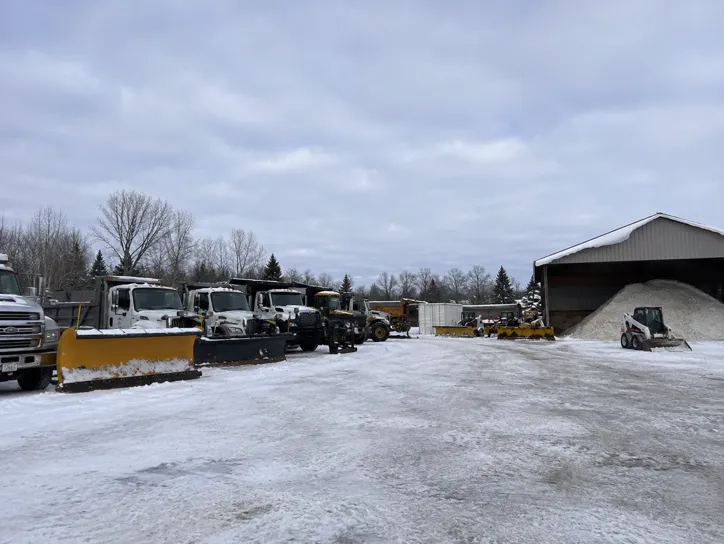
Snow removal services across Ottawa

How commercial snow contracts differ from residential ones

The duty of care is yours

A homeowner clears for convenience. An occupier clears because the Occupiers' Liability Act says people on the premises must be reasonably safe, and that standard is documented, not felt.

Cleared before opening, not after

Commercial routes run overnight and through the storm so lots, aisles and entrances are usable before staff, tenants and customers arrive, rather than after the first person has walked them.

Scope is written, not assumed

Surfaces, triggers, response windows, salting frequency, snow storage locations and hauling terms are named in the agreement so nobody argues about coverage mid-storm.

Contract structure

Seasonal snow removal contracts versus per-event pricing in Ottawa

Two structures cover almost every Ottawa commercial site. A seasonal contract fixes your winter cost for the whole season, which is what a budget holder wants when the record books show 444.6 cm in 1970-71 and 432.7 cm in 2007-08 against typical winters closer to two metres. That spread is real risk, and a seasonal price moves it off your budget and onto our operation. Per-event pricing bills only when a trigger is met, which suits a site with a low tolerance for fixed cost and a manager willing to watch the forecast. Ottawa averages 52 days a year with measurable snowfall, so the arithmetic between the two structures is not a coin toss. Whichever you choose, the trigger threshold, response window, salting frequency and hauling terms belong in the same document, priced line by line so you can see what you are buying.

Snow removal in Ottawa
Our Process

How we put an Ottawa commercial property under contract

1

Site walk-through and risk map

We walk the property with you before the season: surfaces, grades, catch basins, entrances, ramps, fire routes and where snow can legally be stacked.

2

Written scope, triggers and response windows

Trigger thresholds, response targets, salting schedule, snow storage locations and hauling terms go into the agreement in writing, priced line by line.

3

Route assignment and 24/7 monitoring

Your site is assigned to a dedicated commercial route with reserved capacity, and Environment and Climate Change Canada warnings drive dispatch.

4

Service, log and review

Every visit is time-stamped and filed, and the record is available to you, your insurer or your board without a scramble months later.

Commercial snow removal pages by property type in Ottawa

Talk to the crew about this property

Tell us the property type, the surface count and the hours you need open, and we will price the contract around them.

Call (343) 326-3526

Commercial snow removal in Ottawa – FAQs

Who is legally responsible for clearing snow on a commercial property in Ontario?

The Occupiers' Liability Act places the duty on whoever controls the premises, which normally means the owner or the occupier running the site. That duty covers walkways, entrances, drive aisles and parking areas on private land. Hiring a contractor does not move the duty off you, but a contractor who documents every visit gives you the evidence that reasonable care was actually taken.

Why do commercial snow contracts insist on time-stamped service logs?

Because of the 60-day written notice rule. A person injured by snow or ice on private property has 60 days to serve written notice stating the date, time and location. You will often learn of the incident two months later, with no memory of that afternoon. A log showing when the crew arrived, what was cleared and what was salted is the only defence that does not rely on recollection.

What accumulation should trigger a commercial site visit in Ottawa?

Something lower than the City's residential threshold. The City plows residential streets at 7 cm and allows itself 10 to 16 hours to finish, while downtown sidewalks and the winter cycling network trigger at 2.5 cm. Most commercial sites sit between those two figures, and high-traffic entrances often run a zero-tolerance program where salting happens whether or not the plow trigger is reached.

What happens to our service during a declared Significant Weather Event?

When the City declares a Significant Weather Event its own service timelines are suspended, which is precisely when a commercial site is most exposed. Your private contract does not suspend. We keep running passes on your route and log each one, because a storm that needs multiple passes with different equipment is also the storm most likely to produce a claim.

Can a lease or tenant agreement move snow clearing responsibility off the owner?

Not for residential common areas. Under Regulation 517/06 of the Residential Tenancies Act a landlord must keep common areas free of unsafe accumulations of ice and snow, and a lease clause pushing that onto tenants is void. Commercial leases have more room to allocate the work, but the occupier's duty under the Occupiers' Liability Act still follows whoever actually controls the area.

Put your Ottawa property on a commercial route

Free site walk-through and a written scope with trigger thresholds and response windows.

Back to top