Ice Dam at the Edge of Your Roof? What Ottawa Homeowners Should Do Next
If you live in Ottawa, you have probably seen it: a row of big icicles hanging from the eaves after a heavy snowfall, sometimes with a thick band of ice sitting behind them.
That does not automatically mean your roof is damaged. But it can become a problem if melting snow gets trapped behind the ice and finds its way underneath the roofing.
The important thing is to figure out what you are actually dealing with, avoid making the situation worse, and know when it is better to leave the roof alone and call someone.
Is It an Ice Dam or Just Icicles?
They often show up at the same time, but they are not the same thing.
An ice dam is a ridge of ice that forms along the colder lower edge of a snow-covered roof. Snow melts higher up, the water runs toward the eaves, and then freezes when it reaches the colder part of the roof.
Over time, more water can collect behind that ice.
A typical Ottawa freeze-thaw cycle can make the problem worse. Snow sits on the roof, daytime temperatures rise enough to cause some melting, and then everything freezes again when temperatures drop.
Heat escaping into the attic can contribute as well. Gaps around an attic hatch, plumbing pipes, light fixtures, ducts, chimneys, and other penetrations can allow warm air into the attic. Poor insulation and blocked or poorly functioning soffit ventilation can also affect roof temperatures.
Roof shape matters too. Valleys, dormers, roof-wall intersections, and different roof sections can create areas where snow and ice behave differently.
So an ice dam does not automatically tell you that your shingles are defective. It tells you that there is a temperature and moisture problem worth looking into.
What Should You Look for?
You can learn quite a bit without getting on the roof.
From the ground, look for:
- A thick ridge of ice running along the eaves.
- Meltwater collecting behind the ice.
- Very large or unusually numerous icicles.
- Sagging or damaged eavestroughs.
- Ice concentrated around valleys or dormers.
- Water dripping from somewhere it normally would not.
Then take a look inside the house.
Check the ceilings and upper-floor walls for new stains, bubbling paint, damp drywall, or discolouration. Pay particular attention to exterior walls and ceiling edges.
If water is dripping from a light fixture or another electrical fitting, don’t investigate it yourself. Keep clear of the area and have the situation assessed.
If you have safe access to the attic, look for wet insulation, water marks, frost, or moisture on the underside of the roof sheathing.
And don’t assume everything is fine just because the dripping has stopped. A leak can stop when the weather changes while moisture that already entered the roof assembly remains.
Don’t Climb Onto an Icy Roof
This is one of the situations where trying to save money can turn into a much bigger problem.
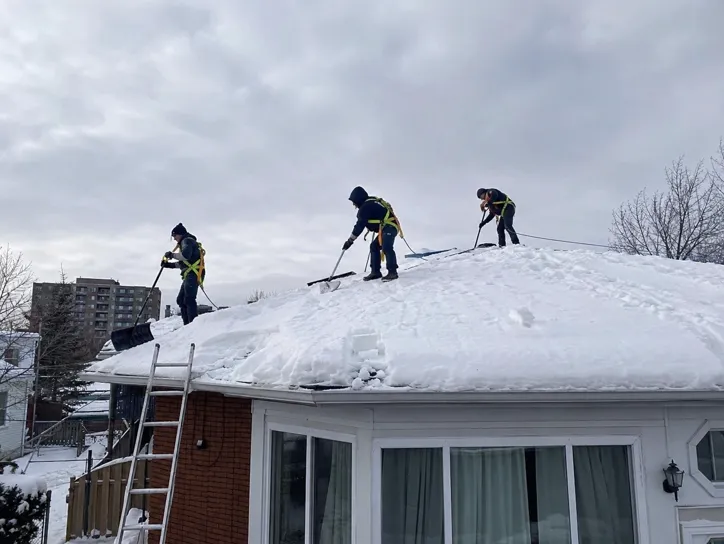
A roof covered with snow and ice is a serious fall hazard. Even a roof that normally feels easy to walk on becomes very different in winter.
Avoid trying to chop the ice away with an axe, hammer, ice pick, or similar tool. Apart from the obvious risk of falling, you can damage shingles, flashing, gutters, and other parts of the roof.
Ladders deserve particular caution as well. Working from a ladder while reaching overhead or sideways toward an ice dam is not a good substitute for proper access equipment.
If the dam is large, difficult to reach, or associated with a leak, it is usually better to have it dealt with professionally.
What About Removing Snow?
Removing snow and removing an ice dam are two different things.
A roof rake can be useful after a heavy snowfall because it allows some snow to be removed from the roof while you remain on the ground. The goal is to reduce the amount of snow sitting on the roof and, in some situations, reduce the amount of meltwater that could contribute to further ice buildup.
It is not an ice-dam removal tool.
Don’t stand on the ground and aggressively scrape away at a frozen ridge with a roof rake. You can damage the roofing, and the tool may not be designed for that kind of force.
If you have a steep roof, a tall roof, multiple levels, or a complicated roof layout, leave the snow removal to someone who has the equipment and experience to do it safely.
How Are Ice Dams Removed?
For a substantial, established ice dam, professional steam removal is a common approach.
The operator uses heated water vapour to cut channels through the ice and reopen a path for the trapped water. This avoids the repeated impact of chopping at the ice with heavy tools.
The goal isn’t necessarily to make every bit of ice disappear. The immediate concern is to reopen drainage and deal with the conditions that are putting the building at risk.
The roofing material matters, so the removal method should be appropriate for the roof rather than treating every roof the same way.
You may also see advice online about putting salt or other de-icing products on an ice dam. Be careful with that. Salt can contribute to corrosion and can cause problems for metal components, plants, gutters, and surfaces around the house. A product that melts ice is not automatically a good product for your roof.
When Is an Ice Dam an Emergency?
Not every ice dam requires someone at the house immediately.
You should, however, arrange professional help promptly if:
- Water is getting into the house.
- You find wet attic insulation.
- There is significant moisture in the attic.
- The ice dam is too high or difficult to reach safely.
- The roof is steep or otherwise hazardous to access.
- There is a large amount of snow on the roof.
- Shingles, flashing, or gutters appear damaged.
- Ice is hanging over an area where it could fall on people, vehicles, or property.
- Water has reached electrical equipment.
Also pay attention to the roof itself.
A roof that is visibly sagging, moving, or showing other signs of structural distress should be assessed promptly. Heavy wet snow can weigh considerably more than the same volume of light, freshly fallen snow, so there isn’t a useful one-size-fits-all number for when snow becomes dangerous.
If you are concerned about the load on the roof, have it assessed rather than guessing from a generic snow-weight chart.
Why Do Ice Dams Keep Coming Back?
Removing the dam deals with the immediate problem. It doesn’t necessarily deal with the reason it formed.
If the same part of your roof develops an ice dam every winter, that’s worth investigating.
One of the first places to look is the attic.
Air leakage
Warm air from the house can escape into the attic through relatively small openings. Common trouble spots include:
- Attic hatches.
- Plumbing penetrations.
- Electrical wiring and fixtures.
- Ducts.
- Chimneys and flues.
- Bathroom and kitchen exhaust penetrations.
- Gaps around other openings between the house and attic.
Air sealing these areas can make a significant difference.
Simply adding more attic vents isn’t necessarily the answer. If warm indoor air is still leaking into the attic, additional ventilation won’t solve the underlying leakage.
Insulation
The insulation should form a reasonably continuous thermal barrier between the heated part of the house and the attic.
Check for insulation that is missing, compressed, uneven, or noticeably thin. The perimeter of the attic can be particularly important because it can be harder to maintain good insulation coverage above the exterior walls.
Ventilation
Soffit intake vents need to remain open, and insulation should not be pushed into the ventilation path.
Exhaust ventilation also needs to work as intended.
The important point is that attic ventilation is part of a larger system. More vents do not automatically mean better ventilation, and ventilation alone cannot compensate for significant air leakage from the living space.
If ice dams keep forming, the attic and roof assembly need to be looked at as a whole.
Does an Ice Dam Mean You Need a New Roof?
Usually, you shouldn’t jump straight to that conclusion.
A roof can be in perfectly serviceable condition and still develop ice dams because of heat loss, air leakage, insulation, ventilation, roof design, or weather.
Replacing the shingles may leave the real problem untouched.
If one section of the roof keeps developing an ice dam, it makes more sense to investigate what is happening above that section before deciding that the roofing itself is the cause.
Of course, ice dams can cause roofing damage. If water has been backing up repeatedly, shingles, flashing, underlayment, sheathing, and interior finishes may need to be inspected.
The point is that the presence of an ice dam alone is not enough to tell you that the entire roof needs replacement.
Why Ottawa Roofs Can Be Prone to Ice Dams
Ottawa gets the combination that ice dams need: snow, prolonged cold weather, and periods where temperatures rise and then drop again.
That doesn’t mean every Ottawa roof is going to develop them.
Some roofs simply have areas that are more susceptible. Dormers, valleys, multiple roof sections, large overhangs, and roof-wall intersections can all affect how snow accumulates and where water eventually freezes.
Pay attention to patterns.
If the same section of the eaves develops a thick band of ice every winter, don’t just treat it as something that comes with living in Ottawa. There may be an attic or roof detail behind the recurring problem that can be corrected.
Choosing an Ice-Dam Removal Company
If you decide to bring in a professional, ask what they actually plan to do.
A good contractor should be able to explain:
- How the ice will be removed.
- How they will avoid unnecessary damage to the roofing.
- Whether they use low-pressure steam.
- How they deal with fall hazards.
- How they manage falling ice.
- Whether they are properly insured.
- Whether they will look for signs of water intrusion.
- What they think may be causing recurring ice dams.
Be wary of anyone who treats ice-dam removal as a permanent solution.
Removing the ice gets the water moving again. It doesn’t magically fix an insulation problem, an air leak, a ventilation problem, or a roof detail that causes snow to melt and refreeze in the same place every year.
The Bottom Line
An ice dam is something to pay attention to, but it isn’t automatically a sign that your roof is failing.
If there is no sign of water getting into the house, you can monitor the situation and deal with snow safely from the ground when appropriate.
If water is entering the building, the roof is unsafe to access, or ice is creating a hazard around the house, get professional help.
And if you are dealing with the same ice dam every winter, don’t keep treating the ice as the whole problem.
The more useful question is: why is snow melting on this part of the roof and freezing again at the eaves?
Finding that answer is what can help prevent the same problem next winter.
Frequently Asked Questions
What is an ice dam?
An ice dam is a ridge of ice that forms along the colder edge of a snow-covered roof. It can hold back meltwater and increase the chance of water getting underneath the roofing.
Are large icicles always a sign of an ice dam?
No. Large icicles can form without a significant ice dam. However, large icicles combined with a thick ridge of ice along the eaves are worth paying attention to.
Can I remove an ice dam myself?
It is generally not a good idea to climb onto an icy roof or chop an established ice dam with an axe, hammer, or ice pick. You could fall or damage the roof.
Is a roof rake good for ice dams?
A roof rake is mainly useful for removing snow from the roof from a safe position on the ground. It should not be used to aggressively scrape or chop through an established ice dam.
Is steam safe for removing an ice dam?
Professional low-pressure steam removal is commonly used for established ice dams. The method should be suitable for the particular roofing material and performed by someone equipped to work safely at height.
Should I put salt on an ice dam?
Don’t assume that salt or another de-icer is safe for your roof. Salt can contribute to corrosion and damage surrounding vegetation and materials. For a substantial ice dam, professional removal is a safer approach.
How do I prevent ice dams?
Start with the attic. Proper air sealing and insulation can reduce heat escaping into the attic, while properly functioning soffit and exhaust ventilation helps maintain more consistent roof temperatures. Roof design and other building-envelope details can also contribute.
Do I need a new roof if I have ice dams?
Not necessarily. Ice dams can form on roofs that are otherwise in good condition. Before replacing the roof, investigate the attic, insulation, air leakage, ventilation, and roof details that may be contributing to the problem.