Winter routes fill early - free written quotes within one business day
Piles cut and restacked Exit sightlines opened Surfaces underneath protected Off site when relocation fails

Snow Pile Removal in Ottawa Before the Banks Take Your Property

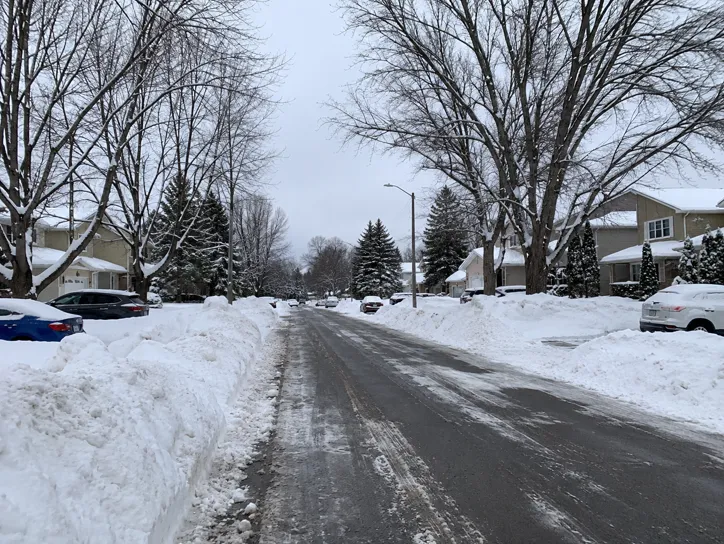
Snow Removals Ottawa – In Ottawa a snow pile is not temporary storage, it is a structure that grows for four months because almost nothing melts between storms. Long before it needs a truck, it starts costing you sightlines, surface and the ground it is sitting on, and that is the point where it should be cut down and moved.

Free written quotes
24/7 storm monitoring
Serving all of Ottawa
Time-stamped service logs

Get your free snow removal quote

Tell us about the property and we will reply with a clear written price.

What can we help with?

So the right crew reviews your project.

No obligation. We reply within one business day.

115 days A year with at least 1 cm on the ground
21 cm Average mid-winter snowpack depth
14.2 days February days with 20 cm or more already down
47 cm February snowfall against January's 39 cm

When an Ottawa Snow Pile Stops Being Storage and Becomes a Problem

Piles compound here, they do not clear

Ottawa carries at least 1 cm of snow on the ground about 115 days a year, with a mid-winter snowpack averaging 21 cm. February alone averages 14.2 days with 20 cm or more already down while adding another 47 cm on top, ahead of January's 39 cm. Almost nothing leaves between storms, so every push adds to a bank that never got smaller.

A pile at a driveway mouth or lot exit blocks sightlines

A bank at the corner of an exit puts a driver's front bumper into the travelled lane before they can see what is coming. On a residential driveway that is the pile at the end of the apron, and on a commercial site it is the bank at the corner of the entrance. Neither is solved by pushing it back another metre. It has to come down in height or leave.

Piles refreeze across the surface they sit above

A large pile releases water every afternoon the temperature climbs, and that water runs downhill across whatever is below it and refreezes overnight into a sheet nobody treated because nobody saw it form. The bottom of a sloped driveway and the drive lane below a lot corner are the classic locations, and the pile above them is the water source.

Piles kill grass and settle interlock

Snow stacked on a lawn compacts the soil, holds ice on the crown of the grass into spring and regularly comes back as a dead patch in the exact shape of the pile. On interlock the load is worse, because a heavy pile on a paver field bears down on units laid over a compacted base and settles them unevenly. Where the pile goes is a surface decision, not just a space decision.

The point where relocation stops working

Every property has a finite number of low-value corners, and once the banks are as high as equipment can safely stack and the remaining corners are gone, the next storm has nowhere to go except back onto working surface. That is the signal that the volume has to leave the property rather than be shuffled around it, and it always arrives sooner than owners expect.

Why piles grow

The Ottawa Stacking Math Behind Every Snow Pile That Will Not Shrink

Ottawa does not clear between storms, it accumulates. There is at least 1 cm on the ground about 115 days a year, the mid-winter snowpack averages 21 cm, and February averages 14.2 days with 20 cm or more already down while delivering another 47 cm, more than January’s 39 cm. Every clearing pass therefore lands on top of the last one rather than replacing it, and the bank at the end of a driveway or the corner of a lot is a cumulative record of the whole winter. By mid-February that pile is compacted, refrozen and no longer something a blade will move. The practical consequence is that piles have to be managed while they are still snow, cut down and restacked on a schedule, rather than dealt with when they have already taken the surface.
Ottawa commercial snow removal

How Snow Piles Are Managed on an Ottawa Site

Cut down and restacked

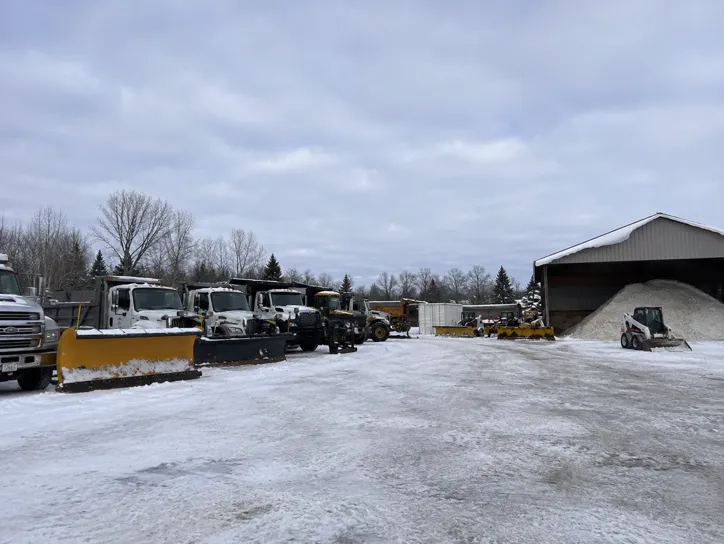
Banks are worked down and relocated while they are still snow rather than ice, which keeps machine hours low and keeps drive lanes at full width.

Moved to the low-value corner

Piles are placed where they cost least: away from exits, off lawns and pavers, and clear of the surfaces meltwater runs across on a mild afternoon.

Off site when the room runs out

When restacking stops being possible, the volume is loaded and removed rather than pushed back into a drive lane, and never onto the road.

Placement is the craft

Choosing Where Snow Piles Go on an Ottawa Driveway or Lot

Deciding where a pile sits is most of the work, and it is decided before the first storm rather than in the middle of one. The questions are always the same: which corner of the property has the least value in winter, which direction does the ground fall so meltwater runs somewhere harmless, what surface is underneath, and does the pile stand between anyone and the view of oncoming traffic. Lawns take compaction and ice burn, interlock takes settlement, and a spot above a sloped drive lane turns into an ice generator every mild afternoon. Once the good corners are chosen, piles get cut back and restacked through the season instead of being allowed to creep outward into parking, walkways and turning space. Relocating within the property is always cheaper than removing from it, right up until it is not possible.

Snow removal across Ottawa
Our Process

How Snow Pile Removal and Relocation Is Handled in Ottawa

1

Map the storage before winter

We identify the low-value corners, the ground slope and the surfaces underneath, so the first storm has a plan rather than a reflex behind it.

2

Watch the banks as they build

Pile height, footprint and how far they have crept into working surface get checked through the season instead of being noticed in February.

3

Cut down and restack

Banks are worked down and moved back to the assigned corners while the material is still snow, before a thaw and refreeze turns them to ice.

4

Escalate to removal from the site

When the corners are full and restacking no longer buys space, the volume is loaded out and taken off the property instead of pushed back.

Snow Pile, Stacking and Storage Services Across Ottawa

Talk to the crew about this property

Call about the banks on your property, where they sit and what they are blocking, and we will plan the storage before it runs out.

Call (343) 326-3526

Snow Pile Removal in Ottawa FAQs

Why does the pile at the end of my driveway keep getting bigger all winter?

Because in Ottawa the snow does not leave between storms. There is at least 1 cm on the ground roughly 115 days a year and the mid-winter snowpack averages 21 cm, so each clearing adds to a bank rather than replacing one. February compounds it further, averaging 14.2 days with 20 cm or more already down and adding another 47 cm on top of that.

Where should snow piles go on a residential or small commercial property?

In the corner that costs the least in winter, chosen before the first storm. That means away from exits and sightlines, off lawns and interlock where the load does damage, and not uphill of a drive lane or walkway that meltwater would then run across. Once the corners are chosen, the piles get cut and restacked to keep them there rather than creeping into parking and turning space.

Will a snow pile damage my lawn or my pavers?

Both, in different ways. On grass a pile compacts the soil and holds ice on the crown well past the thaw, and it commonly reappears in spring as a dead patch shaped exactly like the pile. On interlock the mass bears down on units laid over a compacted base and settles them unevenly, opening joints. Choosing the storage surface is as important as choosing the location.

Why does the ground below our snow pile ice over every night?

The pile is a water source. On any afternoon above freezing it releases meltwater, which runs downhill across the surface below it and refreezes overnight into a sheet that formed after everyone stopped watching. That is why the bottom of a sloped driveway and the lane below a lot corner ice repeatedly. Cutting the pile down or relocating it removes the supply, which treatment alone never does.

When does a pile have to leave the site instead of being moved again?

When the assigned corners are full, the banks are as high as equipment can safely stack, and the next storm would have to be pushed back onto working surface. Relocating within a property is always cheaper than removing from it, so restacking is the first answer, but there is a hard ceiling. Passing that point and continuing to push simply hands the surface over to the pile.

Book Snow Pile Removal in Ottawa

Send photos of your banks and where they sit and we will plan the cutting, restacking and removal before space runs out.

Back to top