Winter routes fill early - free written quotes within one business day
Second-pass clearing Full pad width restored Windrow cut out De-icing once down to surface

Post-Storm Snow Cleanup in Ottawa and the Second Pass That Finishes It

Snow Removals Ottawa – The clearing done during a storm is never the last word, because it happens while snow is still falling and before the City plow has been anywhere near your street. Post-storm cleanup is the pass that widens the pad back out, cuts the windrow and gets the surface down to something that can actually be de-iced.

Free written quotes
24/7 storm monitoring
Serving all of Ottawa
Time-stamped service logs

Get your free snow removal quote

Tell us about the property and we will reply with a clear written price.

What can we help with?

So the right crew reviews your project.

No obligation. We reply within one business day.

7 cm Before the City touches a residential street
10-16 hrs City window after the snowfall ends
Suspended City timelines in a Significant Weather Event
52 days With measurable snowfall in a typical year

Why an Ottawa Driveway Needs Post-Storm Cleanup After the First Clearing

The first clearing happens while it is still snowing

During a long event, a driveway gets opened so people can get in and out, not finished. Snow keeps falling onto the surface that was just cleared, the pad is cut narrower than it really is because there is no point widening into a storm, and the walkway gets a path rather than a proper clearing. None of that is a shortcut, it is simply what mid-storm work is.

The City plow comes afterwards and leaves the windrow

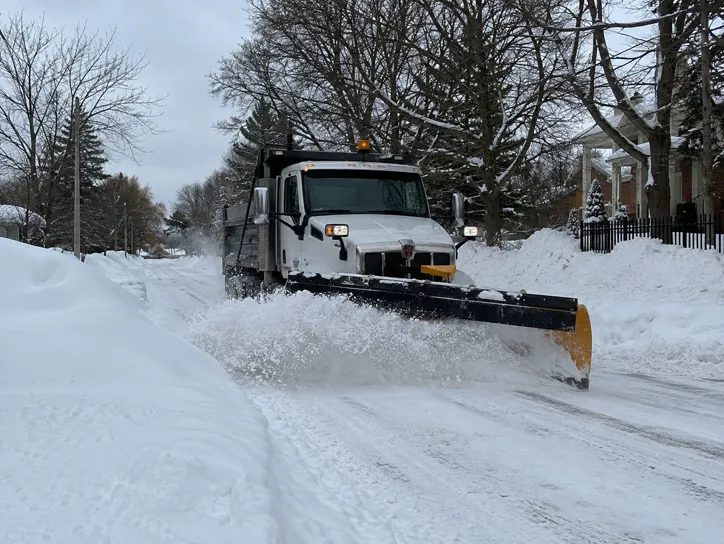
A residential street is not touched until 7 cm has fallen, and then the City has 10 to 16 hours after the snowfall ends. Whenever that pass finally happens, it pushes the full width of the street's snow toward the curb line, and your driveway apron is part of that curb line. The windrow is denser than anything that fell, and it arrives after you thought you were finished.

Drifting refills what was already cleared

On an exposed lot, a corner, or anything with open ground upwind, blowing snow keeps working long after the snowfall warning has expired. A driveway cleared at the tail of a storm can be partly refilled by the following morning without any new precipitation, and the drift lands in the same places every time, usually across the apron and against the garage door.

A partial melt then a hard freeze locks the surface in

This is the one that cannot be undone later. A rough clearing leaves ruts, tire tracks and lumps. A mild afternoon softens them, water runs into the low points, and a hard overnight freeze turns the whole thing into a rutted ice sheet bonded to the driveway. At that stage it is a chipping and de-icing job over days, when a second pass beforehand would have prevented it entirely.

In a Significant Weather Event, City timelines stop applying

When the City declares a Significant Weather Event, its winter maintenance timelines are suspended, and severe storms need multiple passes with different equipment. Your street can be days behind its usual standard, and the windrow arrives whenever the plow finally does. Planning a post-storm pass around that reality is more useful than waiting to see when the street gets done.

The sequence

What Actually Happens to an Ottawa Driveway After the Storm Ends

There is a predictable order to it. First the driveway is opened mid-storm so people can get out, which is deliberately a working clearance rather than a finished one. Then the snow stops and the drifting continues, filling the apron and the strip along the garage. Then, if 7 cm or more has fallen, the City’s residential route runs inside its 10 to 16 hour window and deposits a dense windrow across the bottom of the driveway, at whatever hour it happens to arrive. Then the temperature climbs enough to soften everything, and drops again overnight to set it. A driveway that looked cleared on the evening of the storm can be narrower, blocked at the road and frozen into ruts by the second morning, without a single additional centimetre falling on it.
One-time snow removal in Ottawa

What a Post-Storm Second Pass Covers in Ottawa

Back to the full pad

The driveway is widened out to the edges you actually use, recovering the width that mid-storm clearing deliberately left short.

The windrow cut out

The dense ridge the City plow leaves across the apron is broken out across the full width, not punched through with a single car-width gap.

De-icing on a clean surface

Treatment goes on once the surface is genuinely down to it, which is the only point where a de-icer does what it is supposed to do.

What the pass includes

What Post-Storm Snow Cleanup in Ottawa Actually Involves

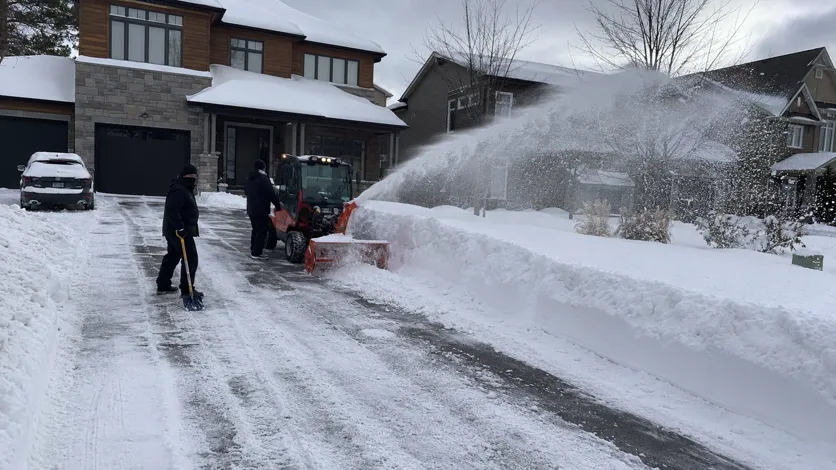
A second pass is a different piece of work from the first one, not a repeat of it. The pad is widened back out to its real edges, including the strip along the garage door and the parking area that mid-storm clearing left short. The windrow at the road is cut out across the full driveway width so the entrance is not permanently narrowed by a bank on either side of a single opening. The walkway and the steps are cleared properly rather than pathed, with the steps taken down to the tread and the nosing where a half-cleared step is the real hazard. Drift that has landed since the storm gets taken off. Then, and only then, the surface is de-iced, because a de-icer spread on top of loose snow does nothing except get scraped away with it.

Snow removal across Ottawa
Our Process

How a Post-Storm Cleanup Visit Runs in Ottawa

1

Wait out the tail of the event

The second pass is timed to the snowfall actually ending and to the street plow having run, rather than to a fixed hour that misses both.

2

Widen the pad and take the drift off

The driveway is opened back out to its full width, including the garage strip and parking area, and any drift that has landed since is removed.

3

Cut the windrow at the road

The compacted ridge left by the plow is broken out across the full apron and stacked on your property, never pushed back onto the road.

4

Finish the walk, steps and surface

The walkway and steps are cleared properly to the tread, and the whole surface is de-iced now that there is a surface to treat.

Post-Storm and One-Time Snow Clearing Services Across Ottawa

Talk to the crew about this property

Call after the snow stops and we will scope the second pass around your pad width, your windrow and the walk.

Call (343) 326-3526

Post-Storm Snow Cleanup in Ottawa FAQs

What is a second pass and why is one clearing per storm not enough?

A second pass is the visit that finishes the job after the event is genuinely over. The first clearing takes place while snow is still falling, so it opens the driveway rather than completing it. Drifting continues afterwards, the City plow deposits a windrow whenever it arrives, and both happen after the first pass. One clearing per storm therefore addresses the storm but not what follows it.

My driveway drifted back in overnight. Is that a new job?

It is part of the same aftermath. On exposed lots and corners, blowing snow keeps redistributing what has already fallen long after the precipitation stops, and it lands in the same places each time: across the apron and against the garage door. Nothing new has fallen from the sky, but the surface is covered again, and the fix is the same second pass rather than a fresh storm response.

Why is our street still not done days after a big storm?

Because when the City declares a Significant Weather Event its winter maintenance timelines are suspended entirely, and severe storms require multiple passes with different equipment. Outside of that, residential streets are not touched until 7 cm has accumulated and then carry a 10 to 16 hour window after the snowfall ends. Both routes end with your street being finished later than you expect, and the windrow arriving then.

Can a driveway that has already frozen into ruts be fixed?

Partly, and it is a much bigger job than preventing it. Once a rough clearing has gone through a partial melt and a hard freeze, the ruts are bonded ice rather than snow, and recovering the surface takes breaking, scraping and repeated de-icing over more than one visit. It rarely comes back fully until a proper thaw. That is exactly why the second pass is worth doing before the freeze.

Why de-ice at the end of the cleanup instead of during the storm?

Because a de-icer needs a surface to work on. Spread onto loose snow mid-storm, most of it ends up buried, diluted or scraped away with the next pass, and it has done nothing for the ice underneath. Once the second pass has taken the driveway down to the actual surface, treatment can bond and work on the thin layer that is left, which is where it earns its cost.

Book Post-Storm Snow Cleanup in Ottawa

Call once the snow has stopped and we will get the pad, the windrow and the walk finished before the freeze sets it.

Back to top